Academic Writing
Task 1 uses a chart, graph, table, map, or process. Task 2 is an essay.

One hour, two tasks, and a mark that leans twice as hard on Task 2. Practise the tasks separately, then write both under a single 60-minute clock.
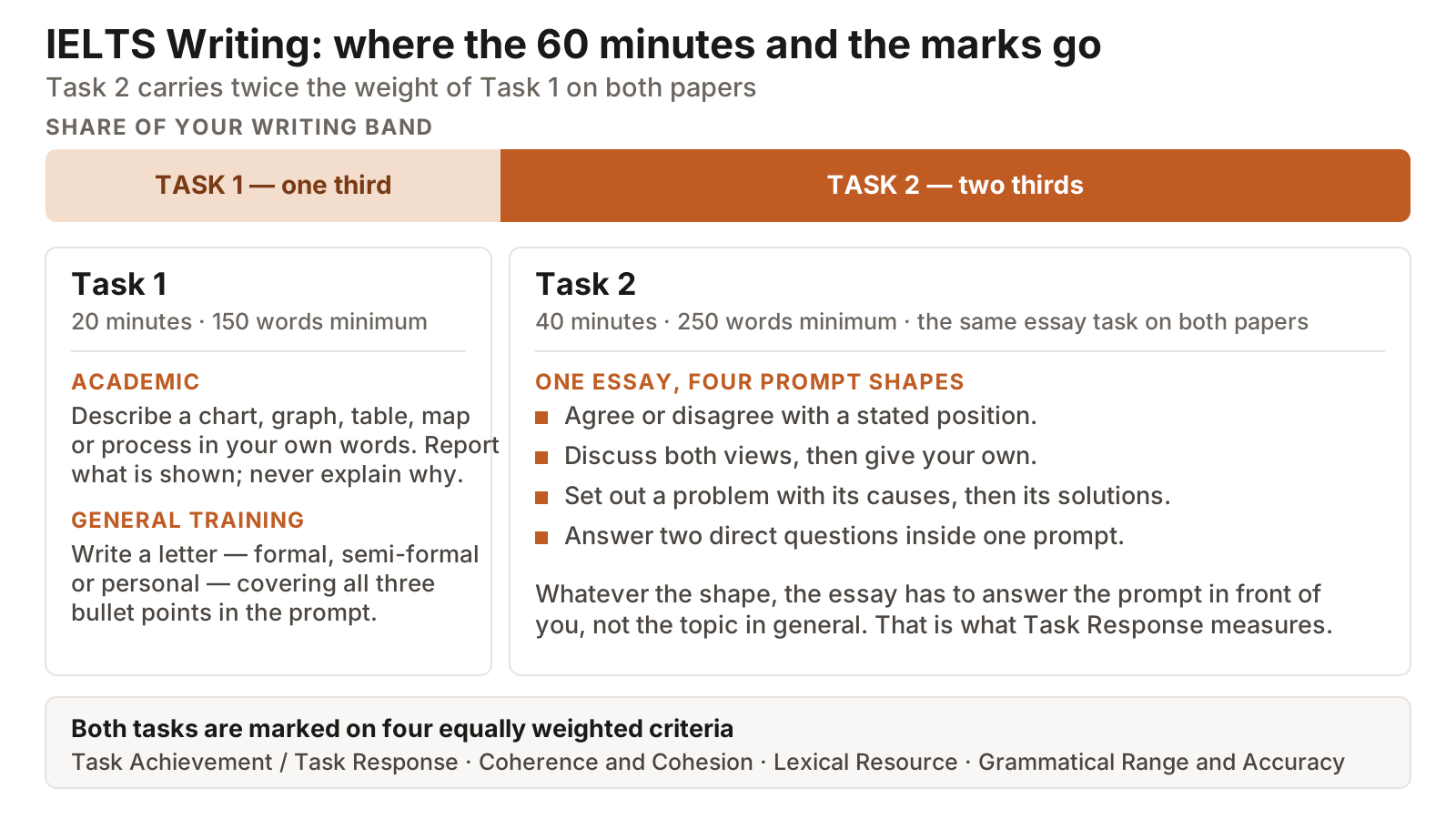
The sixty minutes are not split evenly because the marks are not. Task 2 is worth twice Task 1, which makes twenty minutes and forty minutes a scoring decision rather than a matter of taste. Whichever task you choose to write first, the clock has to stop at the boundary — a beautifully finished Task 1 has never rescued an unfinished essay.
Both papers set the same Task 2. Only Task 1 changes: Academic gives you a chart, graph, table, map or process to describe, General Training gives you a situation and asks for a letter. Both tasks are marked on four criteria of equal weight, and both are penalised below the word minimum, which is why the on-screen word count is part of the exam rather than a convenience.
Choose your test
Task 1 uses a chart, graph, table, map, or process. Task 2 is an essay.
Task 1 is a letter. Task 2 is an essay based on an everyday issue.
Choose a task guide to review original prompts and requirements, or start the complete timed section.
Every prompt on this site is original, and there is no shortage of them. What decides whether they help is the conditions you write under.
The computer-delivered editor has no spellchecker and no autocorrect. An essay typed in a word processor is a different exercise with a different result.
An essay that changes its position halfway through loses more under Coherence and Cohesion than a slow start ever costs. Decide the answer before the first sentence.
150 and 250 words are floors, not targets. Words spent well beyond them are minutes taken from the task that is worth double.
Read it four times — task, structure, vocabulary, grammar — and note one fix for each. A single read finds only the errors you already know you make.
Memorised openers are visible from the first line. A full sample answer shows how a position is held across paragraphs, which is the part that carries marks.
All free, and most are worth keeping open while you write.