
IELTS Listening practice tests online
Four parts, 40 questions and one play only. Learn the shape of the section, drill a single question type, then sit the whole thing under exam timing.
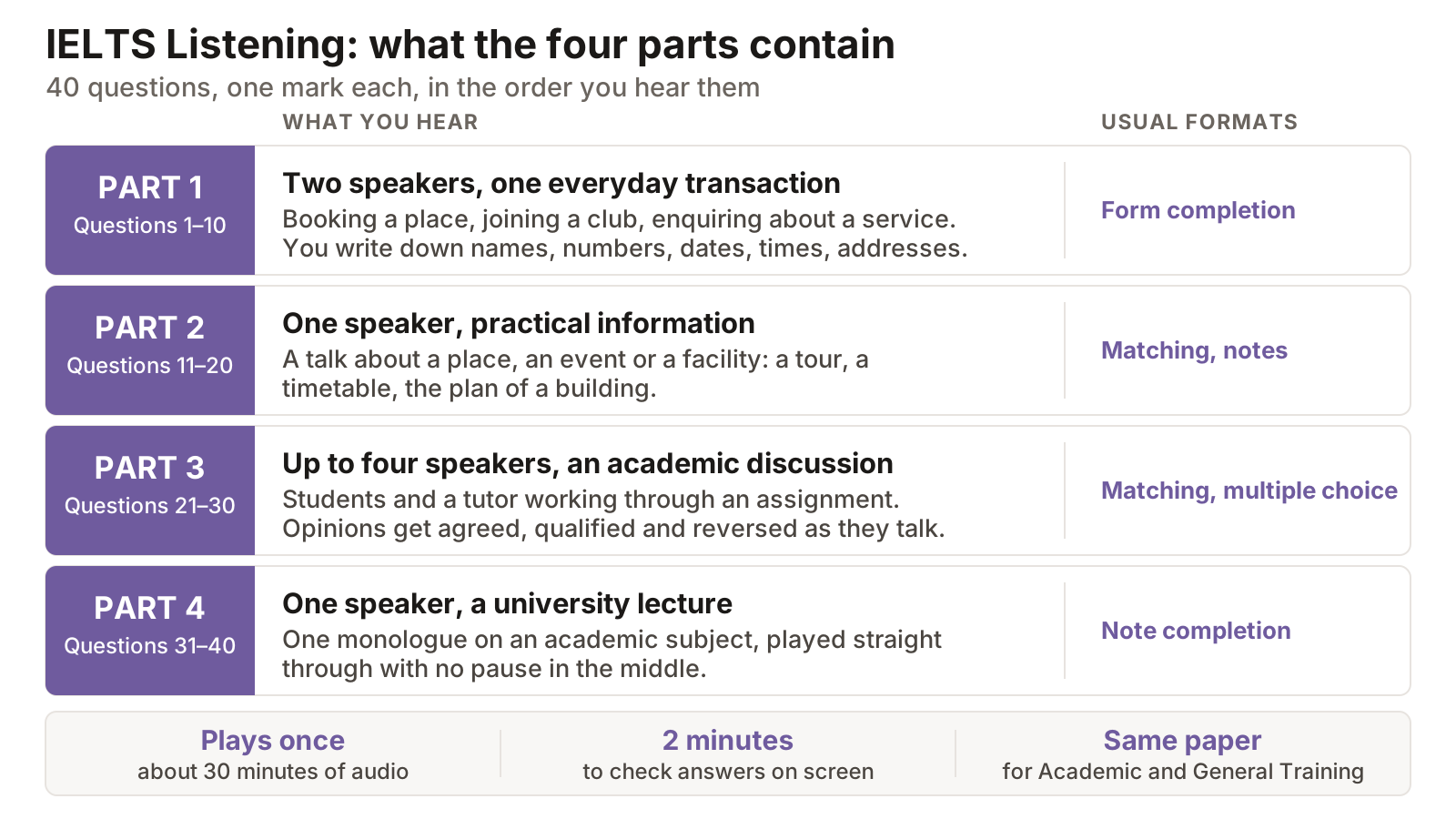
What a Listening section asks of you
The four parts get harder in a straight line. Parts 1 and 2 are everyday English at conversational speed — a booking, a set of directions, a description of a facility — and the answers are concrete: a name, a price, a day, a road. Parts 3 and 4 move into study. Several voices argue their way through an assignment, then a lecturer talks without a break, the vocabulary gets heavier, and the answer is more often a paraphrase of what you hear than the words themselves.
On the computer-delivered test you type into the box beside the question while the recording runs, and there is no ten-minute transfer at the end — only two minutes to check what is already on screen. That changes what is worth practising. The typing has to be automatic, and the checking pass has to be fast and specific rather than a hopeful re-read of all forty answers.
Question type practice
Open any question type for a short drill made only of that type, with the passage or recording it belongs to, plus a timed routine and a self-check.
Multiple Choice (Single)
Choose one answer while listening.
Matching (Lists)
Match items from a list.
Matching Features
Match speakers or items in a grid.
Form Completion
Complete a form while listening.
Note Completion
Complete notes from the recording.
Sentence Completion
Complete sentences with heard words.
How to practise Listening so it transfers to the exam
Every practice section on this site plays the way the exam plays. These are the habits that make that worth something.
Play the recording once
Rewinding turns a Listening test into a comprehension exercise. Sit the section straight through, mark it, and only then go back to what you missed.
Use the gap before each part to read ahead
Each part opens with time to look at the questions. Spend it on the wording and the word limit of the set you are about to hear, not on the answers you have already typed.
Type as you listen
Answers go straight into the box, so slow or uncertain typing loses marks that your listening had already won. Practising on paper hides that cost until test day.
Mark it, then read the transcript
The review screen puts the recording transcript beside your answers. The lines around a lost mark tell you whether you missed the word, the spelling, or the signal that an answer was coming.
Drill one question type when a pattern appears
If three of your errors are matching questions, another full section is the wrong tool. Take that question type on its own from the list above, then return to the whole paper.
Keep going with Listening
Free on this site, and in roughly the order they help.
- Listening dictation practiceType what you hear in short clips and get word-level feedback on spelling and numbers.
- Timed Listening sectionsThe whole 40-question section, one play, marked the moment you submit.
- Listening tips and tricksThe strategy side: what to do on test day, and the mistakes that cost most candidates marks.
- Listening band score chartHow many correct answers out of 40 each band needs, from band 5 to band 9.