
Writing
IELTS Writing Task 2 topics for 2026: the four question types, with 240 practice prompts
Every Task 2 prompt is one of four shapes. Learn the four, plan each in five minutes, and practise on 240 prompts across Academic and General Training.
CD IELTS Prep Editorial Team · Published 26 August 2026 · Updated 30 August 2026 · 9 min read
Original, independent practice guidance. CD IELTS Prep is not an official IELTS provider; confirm current booking and test-day requirements with your test centre.
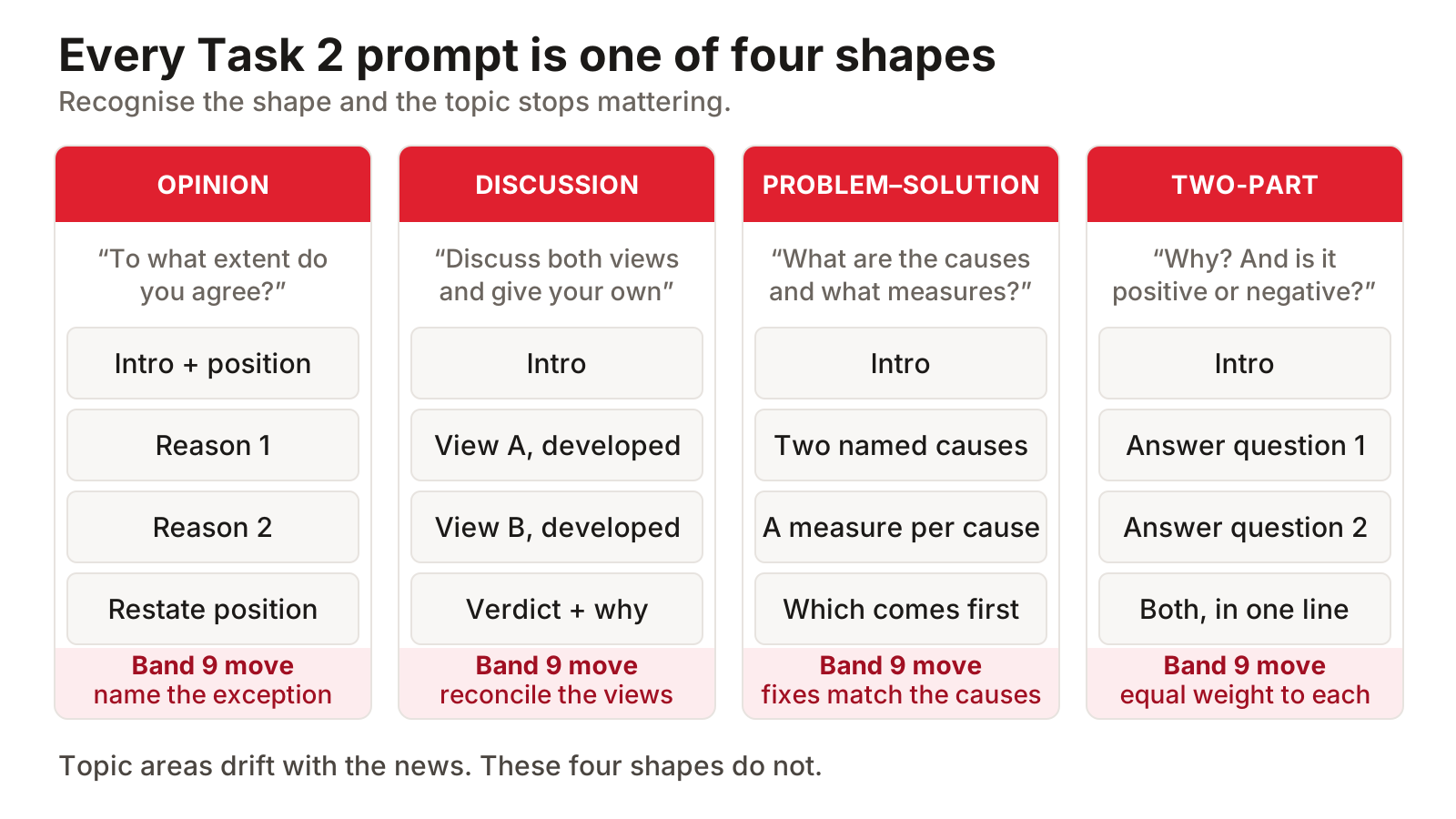
Candidates hunt for leaked topic lists. Examiners rotate topics endlessly. What never changes is the shape of the question — every Task 2 prompt you will ever meet is one of four types, and each type has its own required structure. Learn the four shapes and no topic can surprise you.
Type 1: opinion (agree or disagree)
"To what extent do you agree or disagree?" You must state a clear position in the introduction and hold it to the end. The strongest answers qualify their position — agreeing in most cases while naming the exception — because 'to what extent' is a genuine question, not decoration. Current 2026 topic areas in this shape: whether companies should publish all salaries, whether children under sixteen should have social media accounts, whether unpaid internships should be illegal, whether museums should return artefacts to their countries of origin.
Type 2: discussion (discuss both views)
"Discuss both views and give your own opinion." Both sides need genuine development — a paragraph each — before your verdict. The band 9 move is a final body paragraph that reconciles the two views rather than merely restating them. Current topic areas: single-sex versus mixed schools, punishment versus rehabilitation in prisons, building cities upward versus outward, exams versus coursework.
Type 3: problem and solution
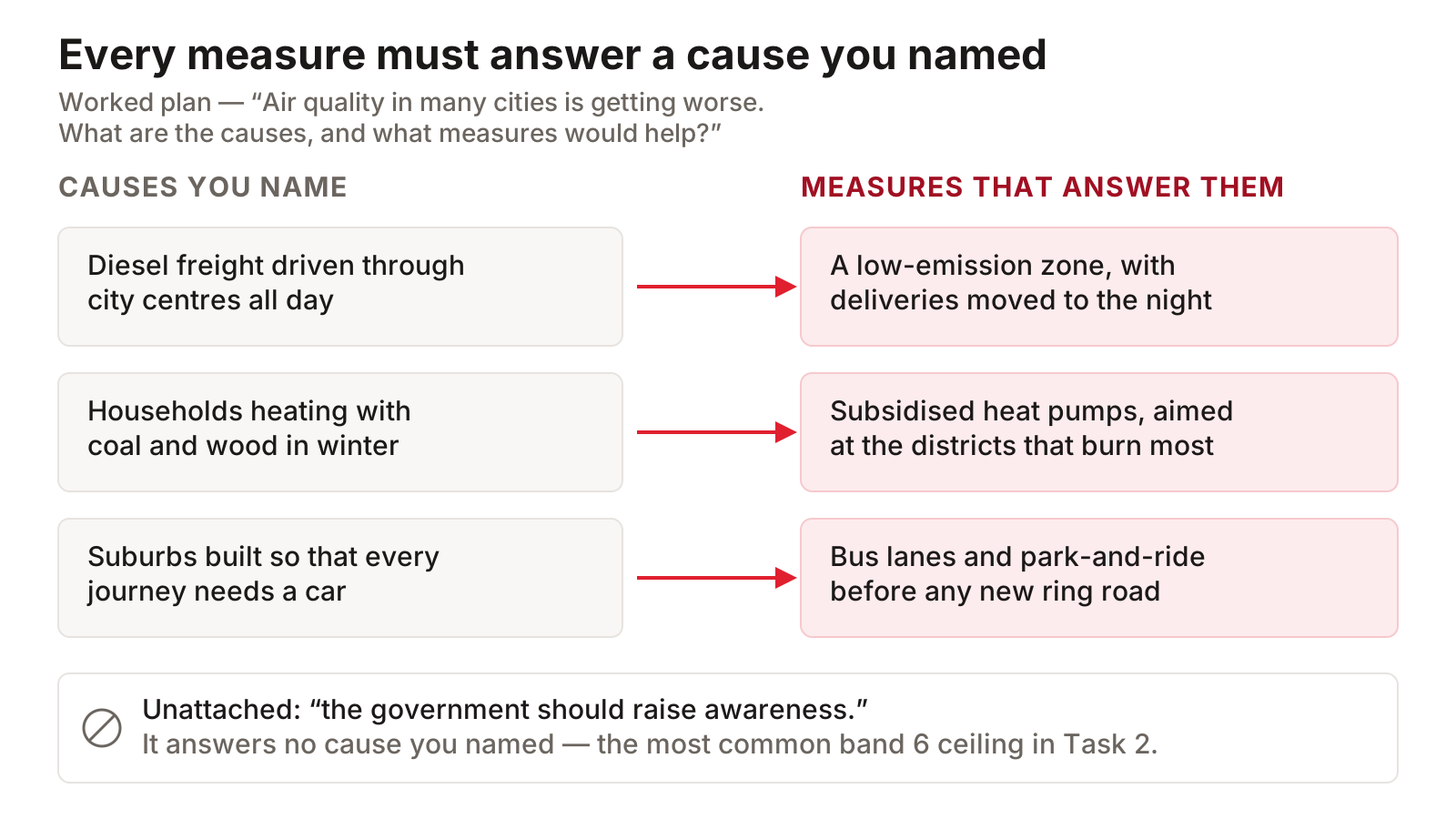
"What are the causes, and what measures would help?" Answer both halves in proportion, and make the solutions map onto the causes you named — generic solutions are the most common band 6 ceiling. Current topic areas: urban air quality, antibiotic resistance, teacher retention, misinformation, first-time buyers priced out of housing.
Type 4: two-part questions
Two direct questions — often "Why is this happening, and is it positive or negative?" Answer both, explicitly, with roughly equal weight. Current topic areas: working past retirement age, the gig economy, news consumed as short video, remote work's effect on communities.
Plan in five minutes, then write
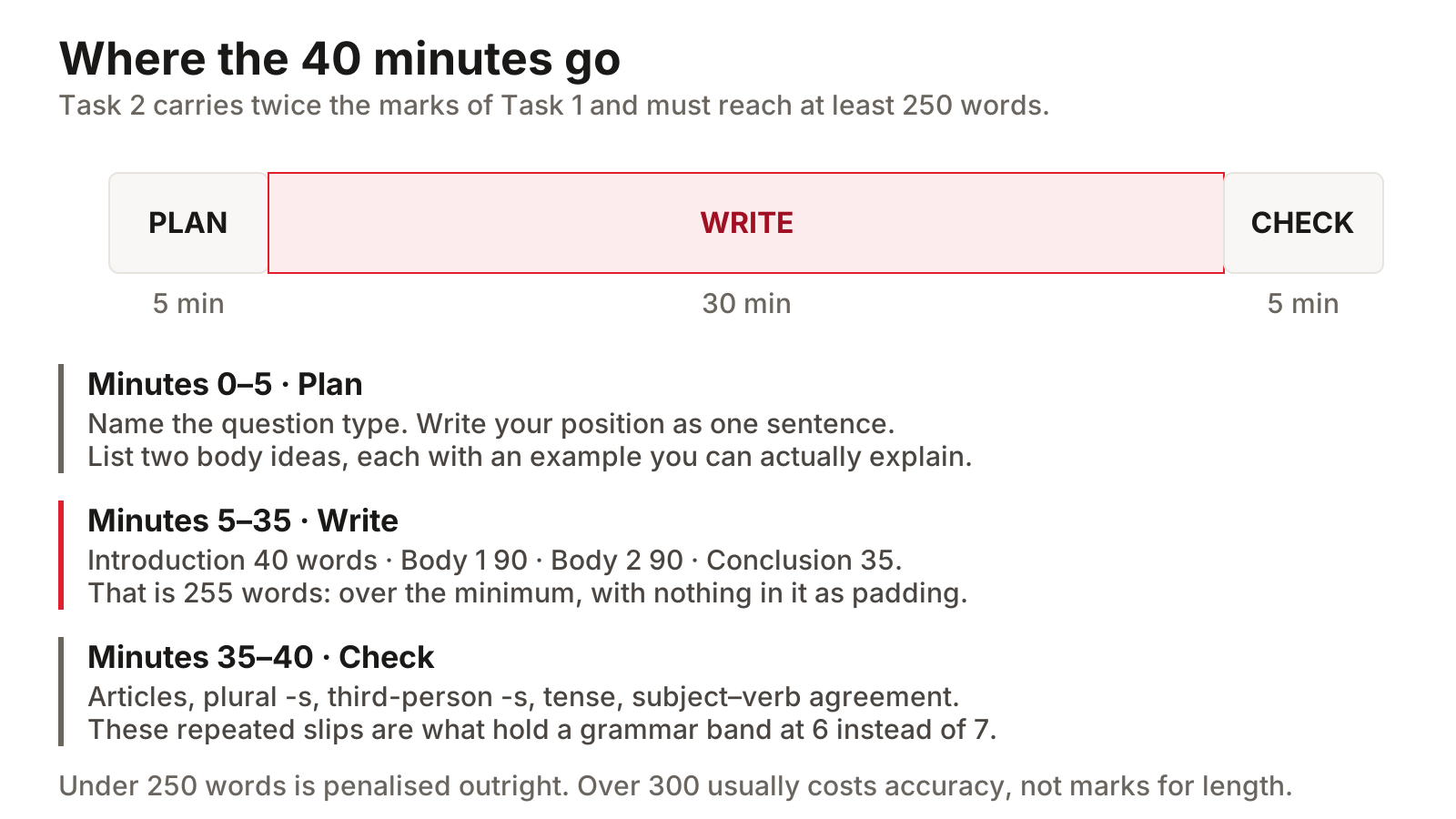
Task 2 is marked on four criteria of equal weight: task response, coherence and cohesion, lexical resource, and grammatical range and accuracy. Two of those four are largely settled before you write a sentence. Task response depends on whether you answered every part of the question actually asked — the commonest band 6 answer is a fluent essay about a slightly different question. Coherence depends on whether each paragraph carries one idea in a defensible order. Only vocabulary and grammar are earned line by line. That is why five minutes of planning buys more marks than five minutes of extra writing.
How to actually use topic lists
- Do not memorise essays — examiners are trained to spot recited answers and the penalty is severe.
- Practise one prompt from each type per week under the 40-minute clock.
- Where a prompt carries a band 9 model answer, compare yours against it afterwards and study the examiner notes: what makes it band 9 is structure and precision, not rare vocabulary.
- Keep a personal error log; most candidates lose the same marks repeatedly.
- Spend one session a month planning only: read ten prompts, and for each write the type, your position and two body ideas in five minutes. Ten plans in fifty minutes trains the skill that decides half your marks.
Common questions
Are the 2026 topics different from previous years?
Topic areas drift with the news cycle — remote work, AI and social media appear more often — but the four question types have not changed in decades. Preparing by type beats preparing by topic.
How many practice essays do I need to write?
Quality beats volume. Fifteen essays across all four types, each reviewed against a model answer and an error log, moves most candidates more than fifty unreviewed ones.
Does the examiner mark my opinion?
No. There is no correct position on any Task 2 prompt. What is marked is whether your position is clear, held consistently, and supported by developed reasons — an unpopular view argued precisely scores above a conventional one argued vaguely.
What if I do not know anything about the topic?
You are not being tested on knowledge, and no examiner checks your facts. Argue from ordinary experience and reasoning rather than inventing statistics; a made-up figure adds nothing to any of the four criteria and often reads as filler.
CD IELTS Prep's writing bank holds 240 Task 2 prompts across all four types — Academic and General Training — of which seventeen carry a full band 9 model answer with examiner notes, plus an instant rule-based estimate for your own answer.
Open the writing bank