
Study method
The 120-day IELTS study plan: a complete week-by-week calendar
Four months from your first mock to test day, week by week: what to practise each day, five checkpoints, and how to read each mock result.
CD IELTS Prep Editorial Team · Published 26 August 2026 · Updated 30 August 2026 · 10 min read
Original, independent practice guidance. CD IELTS Prep is not an official IELTS provider; confirm current booking and test-day requirements with your test centre.
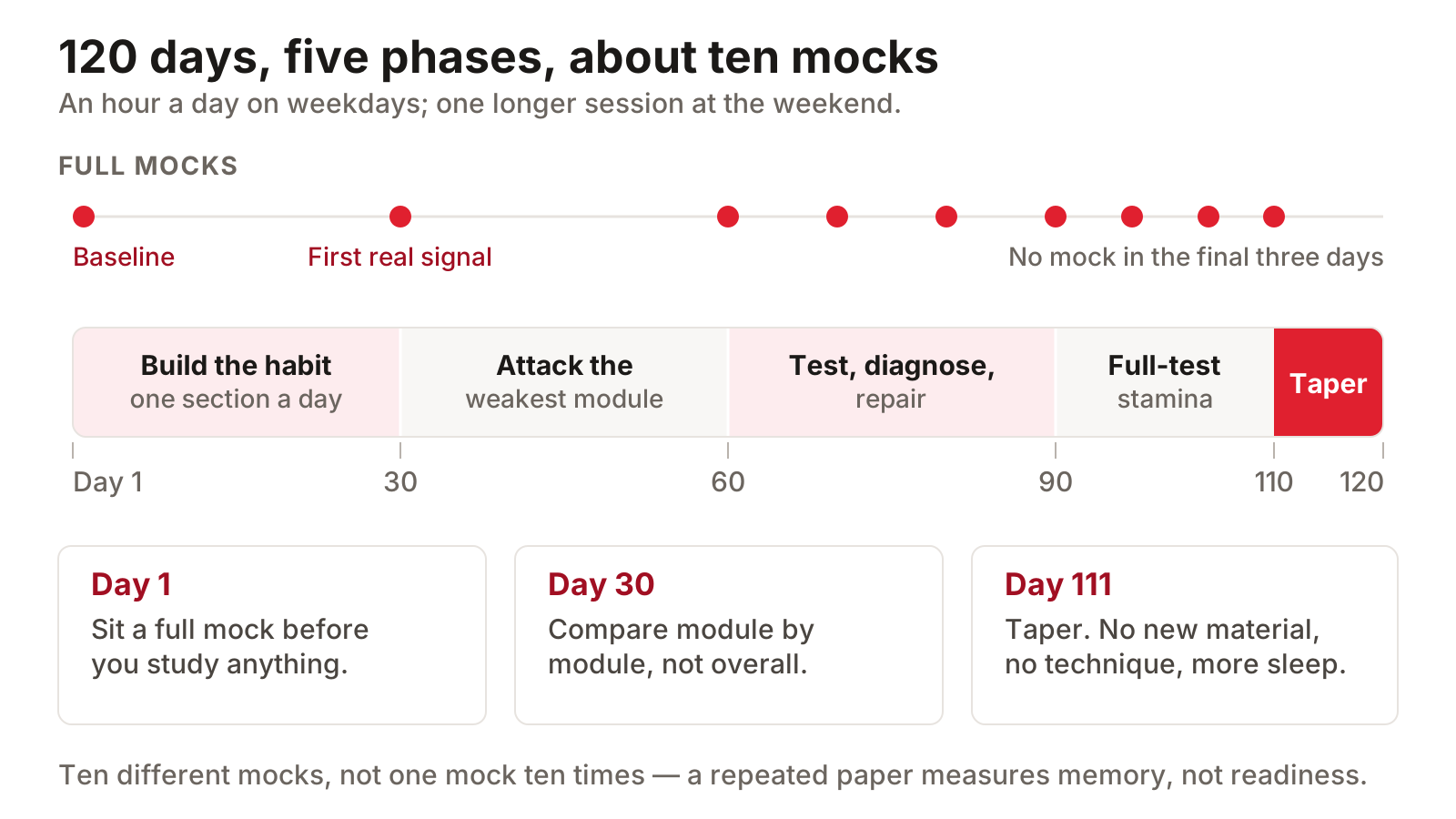
Most study plans promise a band jump in 30 days. For a half-band, sometimes. For a full band — say 6.0 to 7.0 — the honest number for most candidates is three to four months of consistent, reviewed practice. Here is a 120-day calendar that assumes about an hour a day on weekdays and a longer session at the weekend.
Day 1: sit a full mock before you study anything
Take a complete timed mock — Listening, Reading and Writing under one clock — before any preparation. This baseline is the most valuable test you will sit: it tells you which module is weakest, where time pressure bites, and what your starting band actually is rather than what you hope it is.
Record more than the band. Write down the raw score out of 40 for Listening and for Reading, the number of questions you left blank in each, and the clock time at which you started to rush. Those four numbers are what the next four months are built around; a single overall band tells you nothing about where the marks went.
Days 2–30: one module day, every day
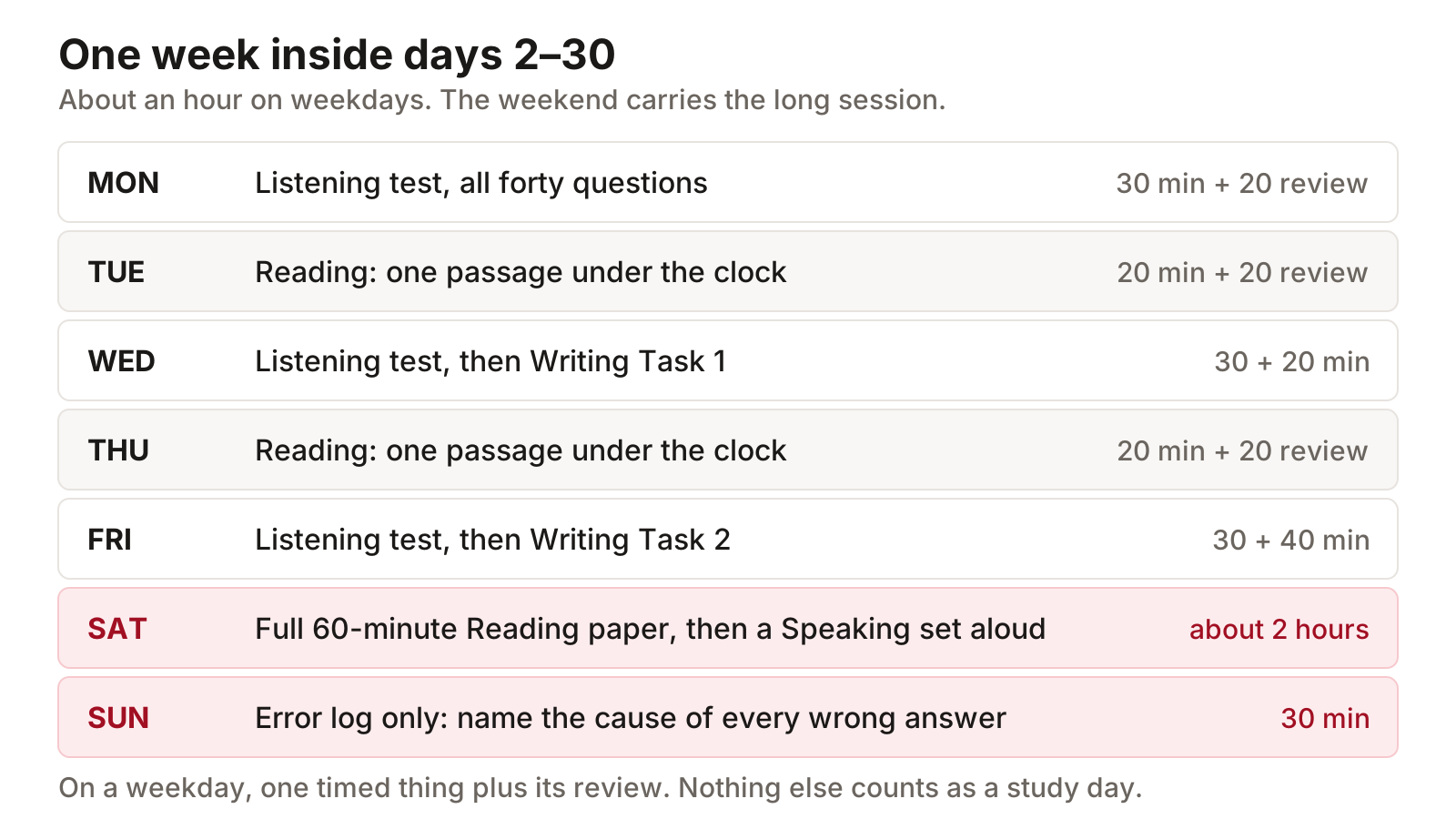
- Alternate Listening and Reading days: a full Listening test one day, one Reading passage under a 20-minute clock the next. Keep the full 60-minute Reading paper for the weekend, where the hour actually fits.
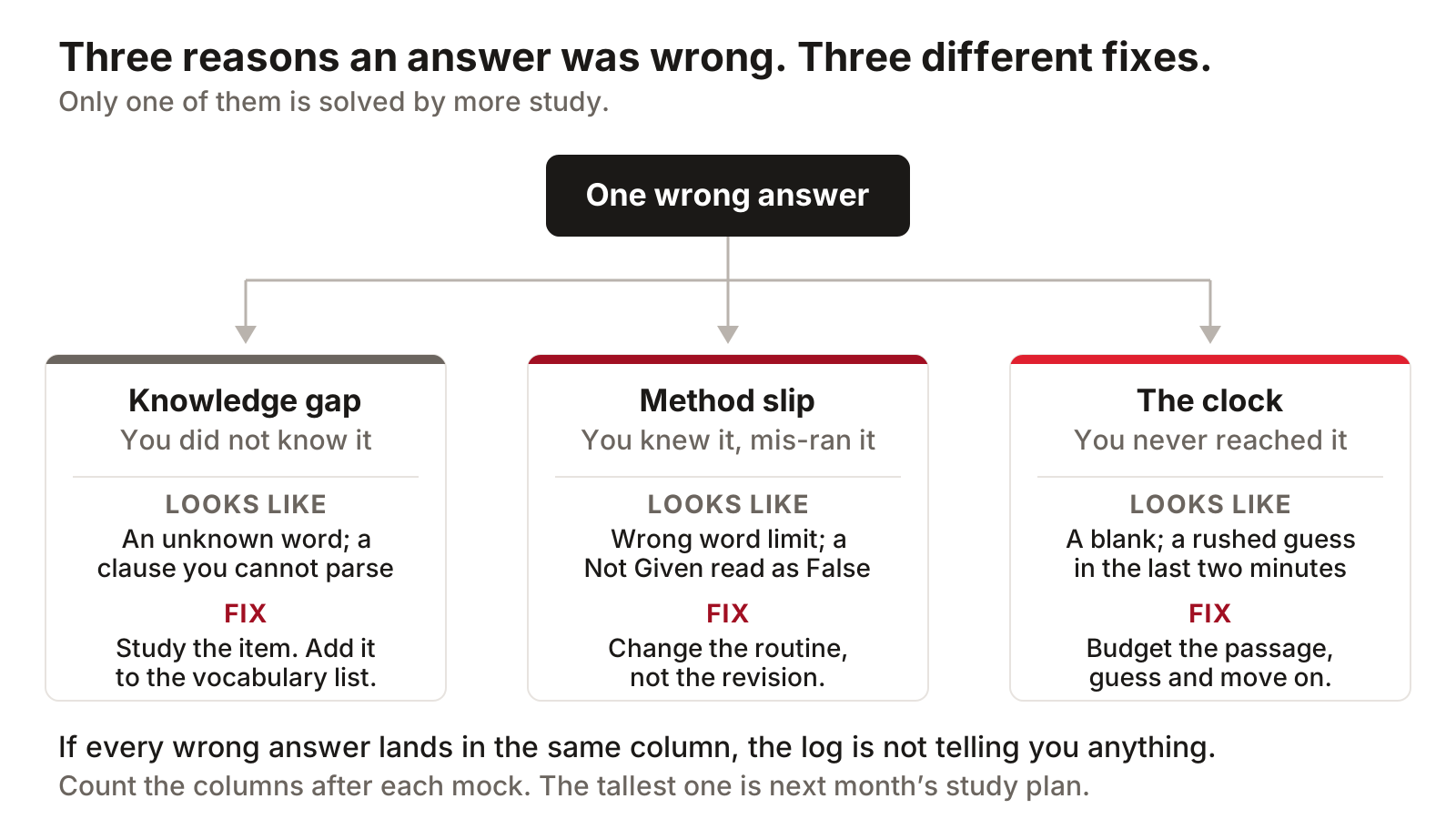
- Review every wrong answer the same day: was it a knowledge gap, a misread, or time pressure? Log which.
- Twice a week, one Writing task under the clock — alternate Task 1 and Task 2 — reviewed against a model answer.
- Once a week, one Speaking topic set aloud: Part 1 answers of 20–30 seconds each, the cue card with one minute's preparation, Part 3 in full sentences.
Day 30: second full mock — your first real signal
Compare against the baseline module by module, not overall. A flat overall band with Listening up half a band and Writing down is not 'no progress' — it is a redirected study plan. Weight the next month toward whatever moved least.
Days 31–60: attack the weakest module
- Give the weakest module four days a week; maintain the others with one day each.
- In Reading, drill your two worst question types specifically — for most candidates: True/False/Not Given and matching headings.
- Raise Writing to three tasks a week. Structure errors should be gone by day 60; what remains is precision.
- Record one Speaking cue-card answer a week and listen back — the gap between how fluent you feel and how you sound is the finding.
Days 61–90: alternate mocks and repair
A full mock every ten days now, with two or three repair days after each targeting exactly what that mock exposed. This rhythm — test, diagnose, repair — is where bands actually move. Somewhere in this window, get a human judgement on your Speaking and Writing; automated estimates are directional, and a teacher's band tells you where you really stand.
Days 91–110: full-test stamina
- Weekly full mocks at the same time of day as your real test.
- Practise the complete arc — Listening straight into Reading into Writing — because the last essay is written on a tired brain, and that is a trainable condition.
- Keep one Speaking session a week to the end; it may be scheduled on a different day from the other three modules, so it needs its own warm-up.
- Stop learning new techniques after day 100. Consolidate the ones that already work.
Days 111–120: taper
One light session a day: a single section, a cue card aloud, a review of your error log. No new material, no mock in the final three days, and no all-nighters — Listening rewards rest more than revision. Confirm your test-day logistics and sleep.
Common questions
Can I compress this into 60 days?
Halve the calendar, not the structure: baseline mock, daily module days, a mid-point mock, weakest-module focus, then weekly mocks. Expect roughly half the band movement of the full plan.
How many full mock tests do I need in total?
This plan uses about ten. They need to be genuinely different tests — repeating the same paper measures memory, not readiness.
What daily time does this assume?
About an hour on weekdays — one timed section plus its review — and two to three hours at the weekend for full mocks and Writing review.
The plan looks light on Speaking. Is that deliberate?
Partly. Speaking rewards frequency over volume: one focused session a week across the whole 120 days does more than a fortnight of intensive work at the end. It is also the module that decays fastest once you stop, which is why it stays in the calendar during the taper when everything else comes out.
What if I miss a week?
Resume where you left off rather than doubling up. The plan works because of the review attached to each session, and a compressed catch-up week is almost always practice without review — which measures effort rather than building anything.
CD IELTS Prep was built for exactly this plan: 120 numbered Listening and Reading practice days, 64 full mock tests, a 480-task writing bank, and progress tracking that shows each module's band moving week by week.
Start day 1 free