
Study plans
Is one month enough to prepare for IELTS?
What four weeks of IELTS preparation can and cannot change, the order to spend them in, and how to decide whether to sit the test or postpone it.
CD IELTS Prep Editorial Team · Published 6 July 2026 · Updated 30 August 2026 · 6 min read
Original, independent practice guidance. CD IELTS Prep is not an official IELTS provider; confirm current booking and test-day requirements with your test centre.
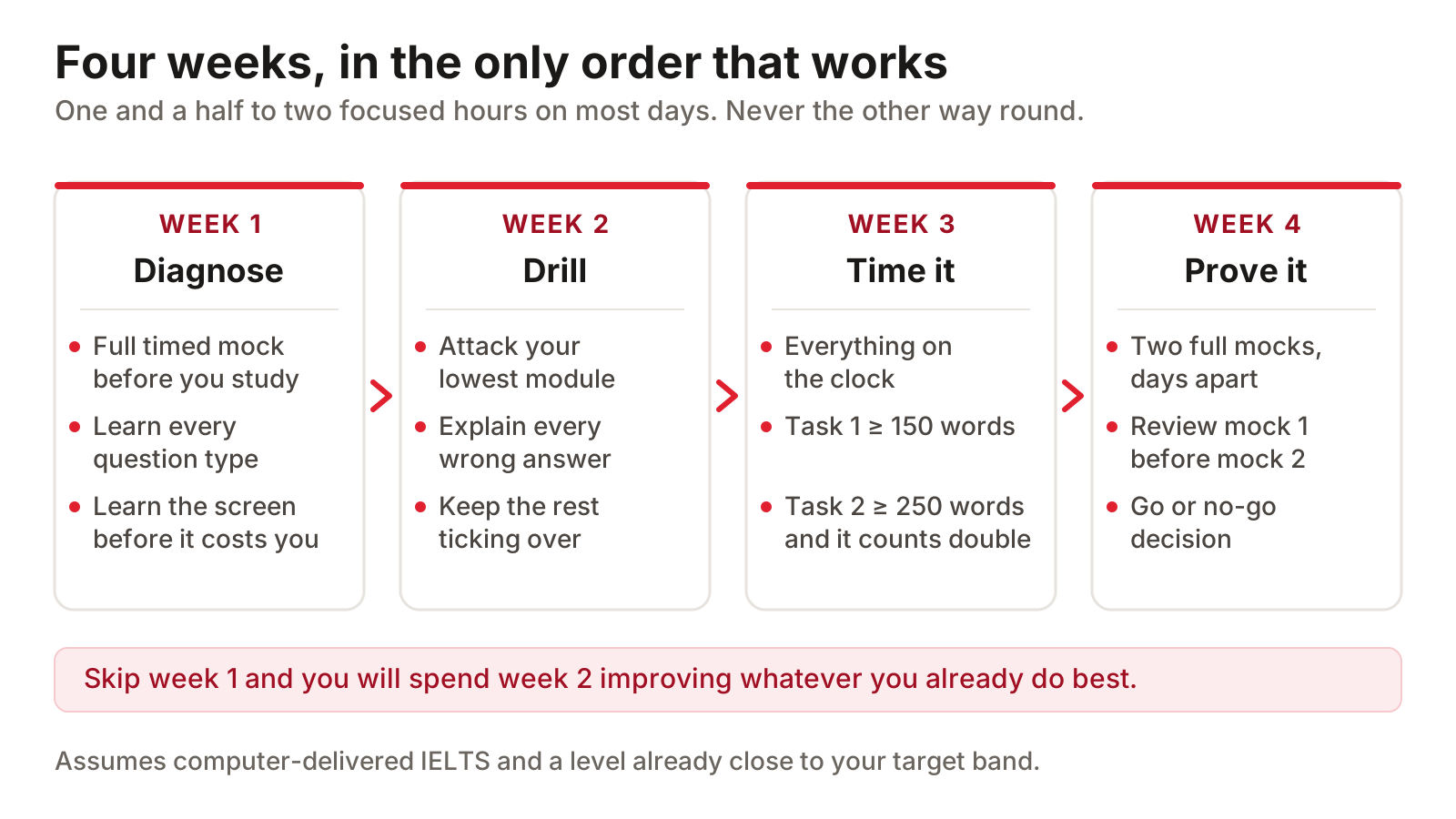
One month is enough time to prepare for IELTS properly, as long as you are honest about what preparation can do. Four weeks will sharpen your exam skills — timing, format knowledge, question types, writing discipline — but it will not rebuild your English from the ground up. This plan assumes your general level is roughly where you need it and your job is to perform at that level on test day.
It also assumes you are taking computer-delivered IELTS and can study for one and a half to two hours most days. Adjust the pace if you must, but keep the order: diagnose, drill, time, prove. What follows is the reasoning behind that order and the evidence you need before booking; if you have already decided and want the month broken into named days, take the 30-day schedule instead.
Already committed to the month and want it laid out day by day?
Open the 30-day scheduleWeek 1: diagnose, then learn the format
Start with a full mock test under timed conditions before you study anything. That feels backwards, but the estimated band you get for each module is the map for the whole month — without it, you are guessing where your time belongs.
Spend the rest of the week on format familiarisation. Learn every question type you will face, and learn the computer interface: highlighting, notes, copy and paste in Writing, and the on-screen word counter. The question-type guides at /guides walk through the mechanics and strategy for each one.
Week 2: drill your weakest module
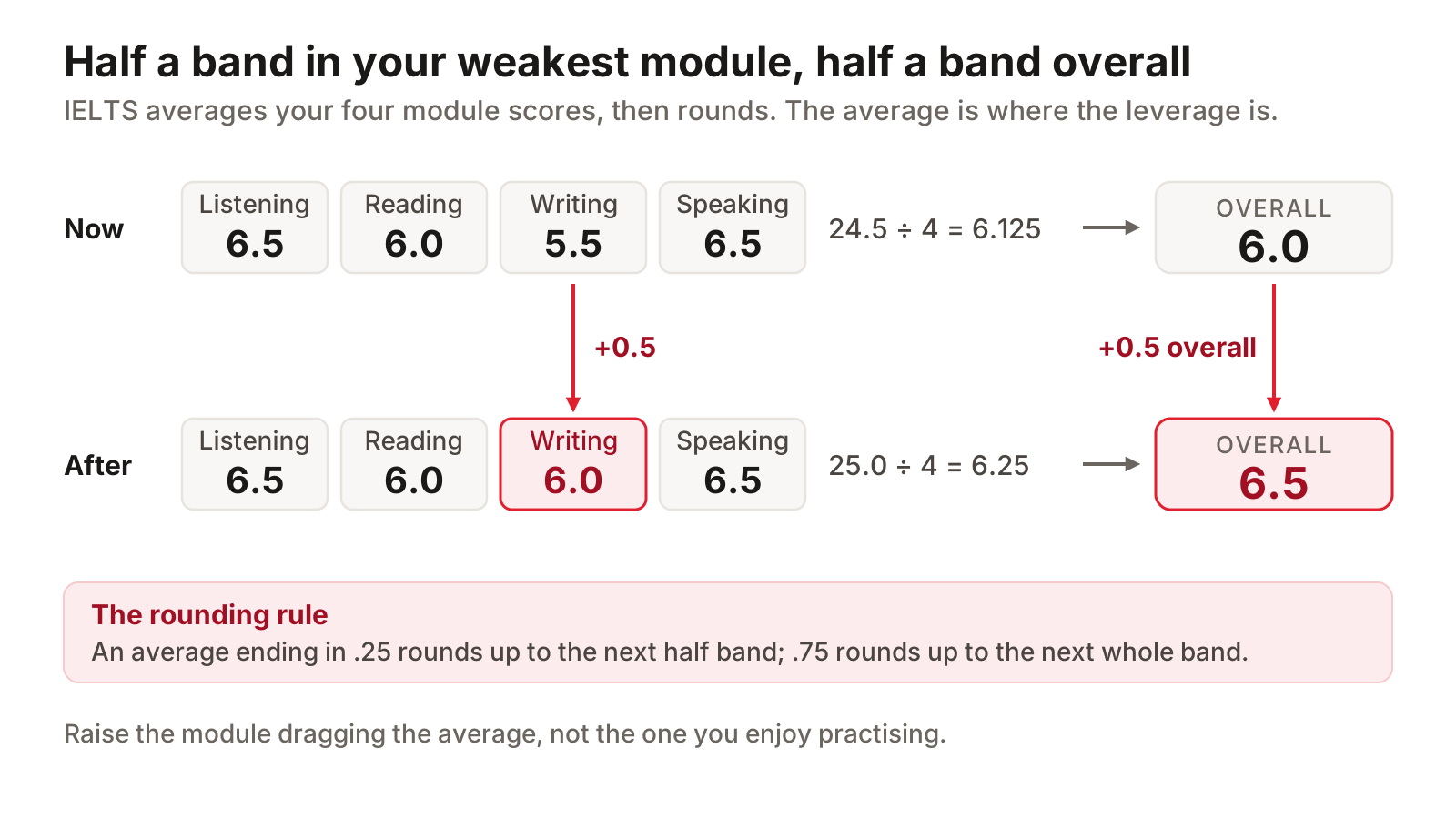
Your diagnostic gives you a ranking, so work on the module at the bottom. Raising your weakest module lifts the overall band faster than polishing a strength, and weaknesses found early are still fixable.
The arithmetic explains why. Your overall band is the average of the four module scores, rounded to the nearest half or whole band, with averages ending in .25 rounding up. A candidate scoring 6.5, 6.0, 5.5 and 6.5 averages 6.125 and is reported as 6.0. Lift Writing alone by half a band and the average becomes 6.25, which rounds up to 6.5.
- Listening: redo the sections where you dropped marks and write down why each answer went wrong — a distractor, a paraphrase you missed, or spelling.
- Reading: practise one question type at a time against the clock, then check every error against the passage until you can explain it.
- Writing: produce one Task 2 essay every second day, and check the word count before you check the style.
- Speaking: record two-minute Part 2 answers and listen back for long pauses, repetition, and tense slips.
Keep a light touch on your stronger modules — one short session every few days — so they do not slide while you drill.
Week 3: timing and word-count discipline
Move everything onto the clock. Most band loss at this stage is mechanical rather than linguistic: unfinished Reading passages, rushed answers in Listening, essays that stop at 220 words. Timed sections expose these problems while there is still time to fix them.
Learn each module's clock before you try to beat it, because the computer-delivered timings are not the ones most textbooks describe.
- Listening: about 30 minutes of recording, then 2 minutes to check what is on screen — there is no 10-minute transfer time on computer, so answers must be right as you type them.
- Reading: 60 minutes for three passages and 40 questions, which is roughly 20 minutes per passage including the questions and no extra checking time at the end.
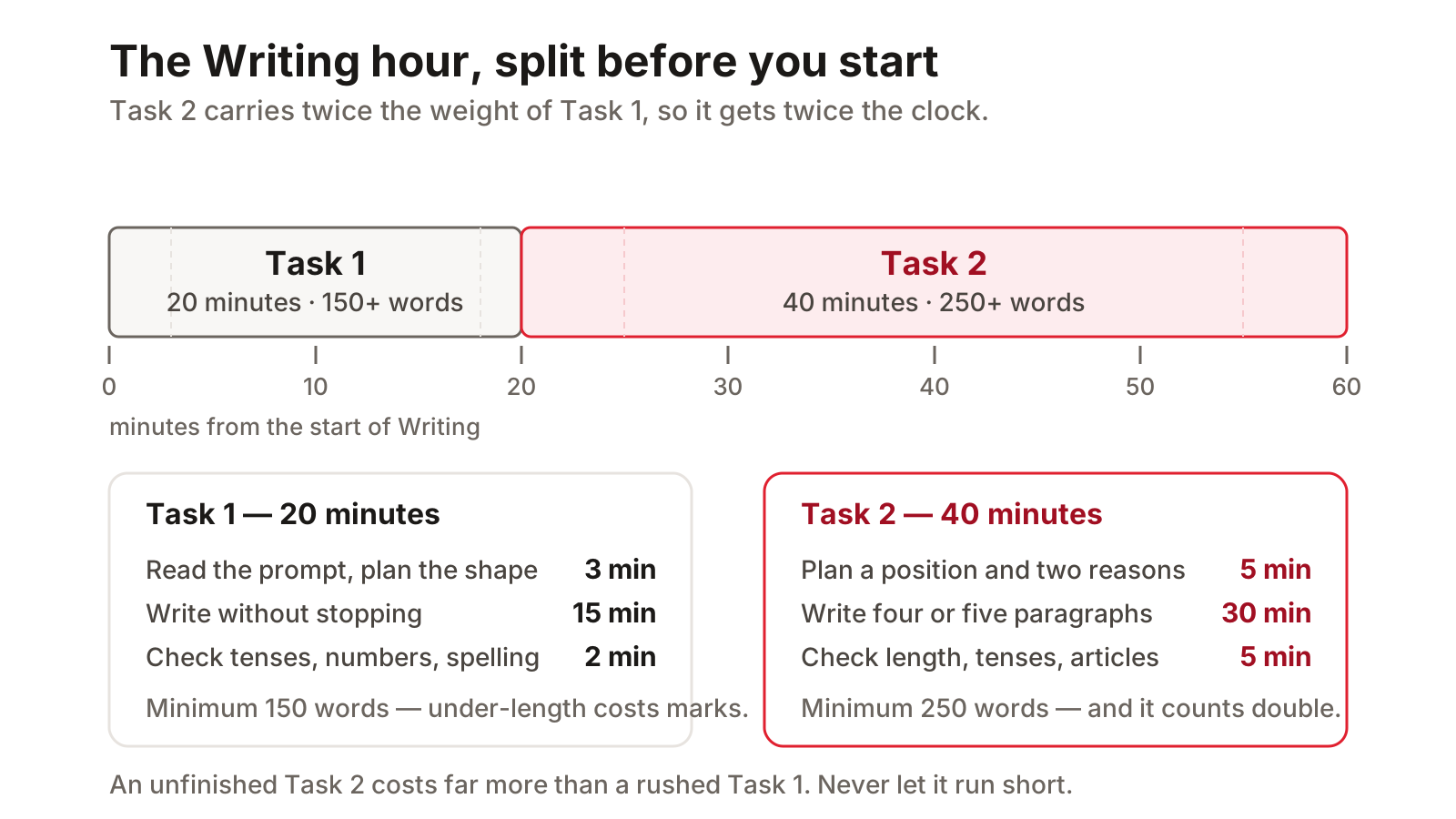
- Writing: 60 minutes, split 20 for Task 1 and 40 for Task 2, because Task 2 carries twice the weight in the Writing band.
- Speaking: 11 to 14 minutes across three parts, including a long turn of up to two minutes that is worth rehearsing against a real timer.
Writing needs special discipline. Task 1 requires at least 150 words and Task 2 at least 250, and under-length answers lose marks regardless of quality. Practise hitting the count without padding, and use the free word counter tool to check practice essays. The band calculator shows how module scores combine into an overall band, which helps you set realistic targets for the final week.
Week 4: prove readiness with two full mocks
Take two full mock tests in the final week, spaced a few days apart, under real exam conditions: one sitting, no pausing, no phone. Between them, review every flagged question and every timing slip from the first mock.
Use the two results as a decision. If both estimated overall bands meet your target, go and sit the real test with confidence. If one module keeps missing, consider delaying the exam by two weeks and drilling that module — a short delay is cheaper than a failed attempt.
What not to do
- Do not memorise essays. Examiners recognise rehearsed answers, they rarely fit the actual question, and forcing one in caps your Writing score.
- Do not hunt for Listening or Reading tricks. There are none: the answers come from the recording and the text, and anything promising a shortcut is marketing.
- Do not take a new mock every day. Two in the final week is enough — careful review of one test teaches more than three tests taken on autopilot.
- Do not skip the basics. Sleep and a calm test-day routine protect the score you have spent a month building.
Common questions
Can I really improve my band in one month?
You can improve your exam performance, which is what most candidates need. Expect gains from format knowledge, timing, and writing discipline rather than a jump in underlying English. If you need a full band of language growth, plan for longer.
How many hours a day should I study?
One and a half to two focused hours on most days beats a weekend binge. Exam skills are habits, and habits need regular repetition rather than occasional marathons.
Should I book the real test before the month starts?
If seats in your city are scarce, book for the end of the month now. Then use the two week-4 mocks as your go or no-go check and reschedule if the estimates say you are not ready.
Are the mock results my real band score?
They are estimates. CD IELTS Prep scores your answers deterministically — the same answers always produce the same result — so an estimate is an honest signal of readiness, not a guarantee of the score you will get on test day.
Week 1 begins with a diagnostic. Sit a free full mock now, get an estimated band for each module, and build your month around the modules that actually need work.
Start with a free mock test