
Scores
How long is IELTS valid, and how many times can you retake it?
Know exactly how long your IELTS result lasts, when a One Skill Retake beats a full resit, and why a remark may be cheaper than booking again.
CD IELTS Prep Editorial Team · Published 9 June 2026 · Updated 30 August 2026 · 6 min read
Original, independent practice guidance. CD IELTS Prep is not an official IELTS provider; confirm current booking and test-day requirements with your test centre.
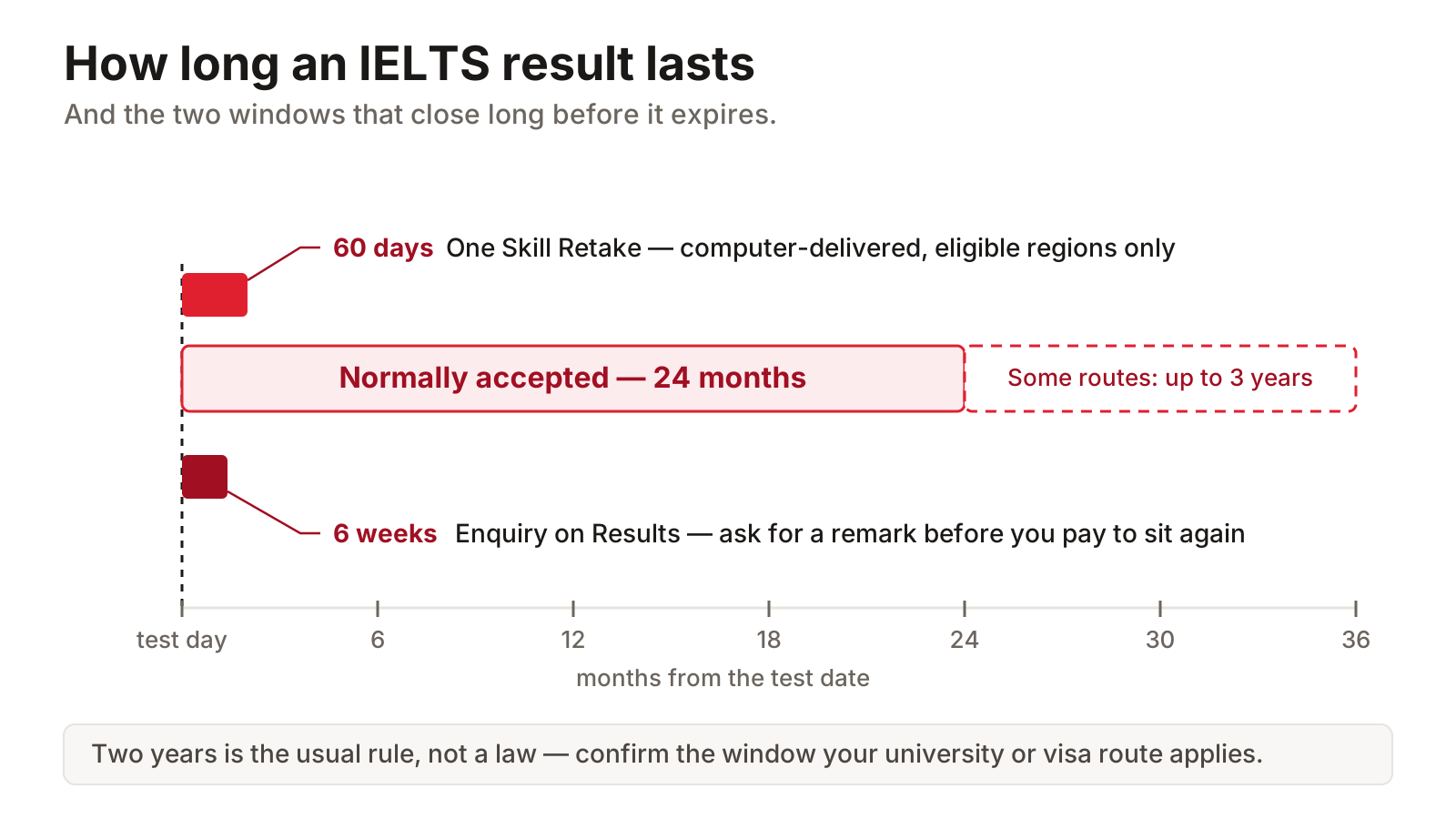
Two questions come up in almost every IELTS conversation: how long does the result last, and what happens if the score is not high enough. The short answers are simple — most organisations accept IELTS results for two years, and you can retake the test as many times as you want. The details deserve a closer look.
How long IELTS results stay valid
For most universities, employers, and immigration departments, an IELTS Test Report Form is treated as valid for two years from the test date. The reasoning is that language ability fades or grows with use, so an old result may not reflect your current level.
There are exceptions. Some Australian skilled migration pathways, for example, have accepted scores up to three years old. Rules like this vary by organisation and change over time, so check the specific requirement you are applying against instead of relying on the general two-year rule.
Retaking the test: the basic rules
There is no limit on how many times you can sit IELTS, and no official waiting period between full sittings. The practical limits are seat availability and your budget, since every sitting costs a new full fee. What you are allowed to retake depends on how you took the test.
- On paper-based IELTS, every retake is the full test: all four modules, every time.
- On computer-delivered IELTS, you may be eligible for a One Skill Retake of a single module instead.
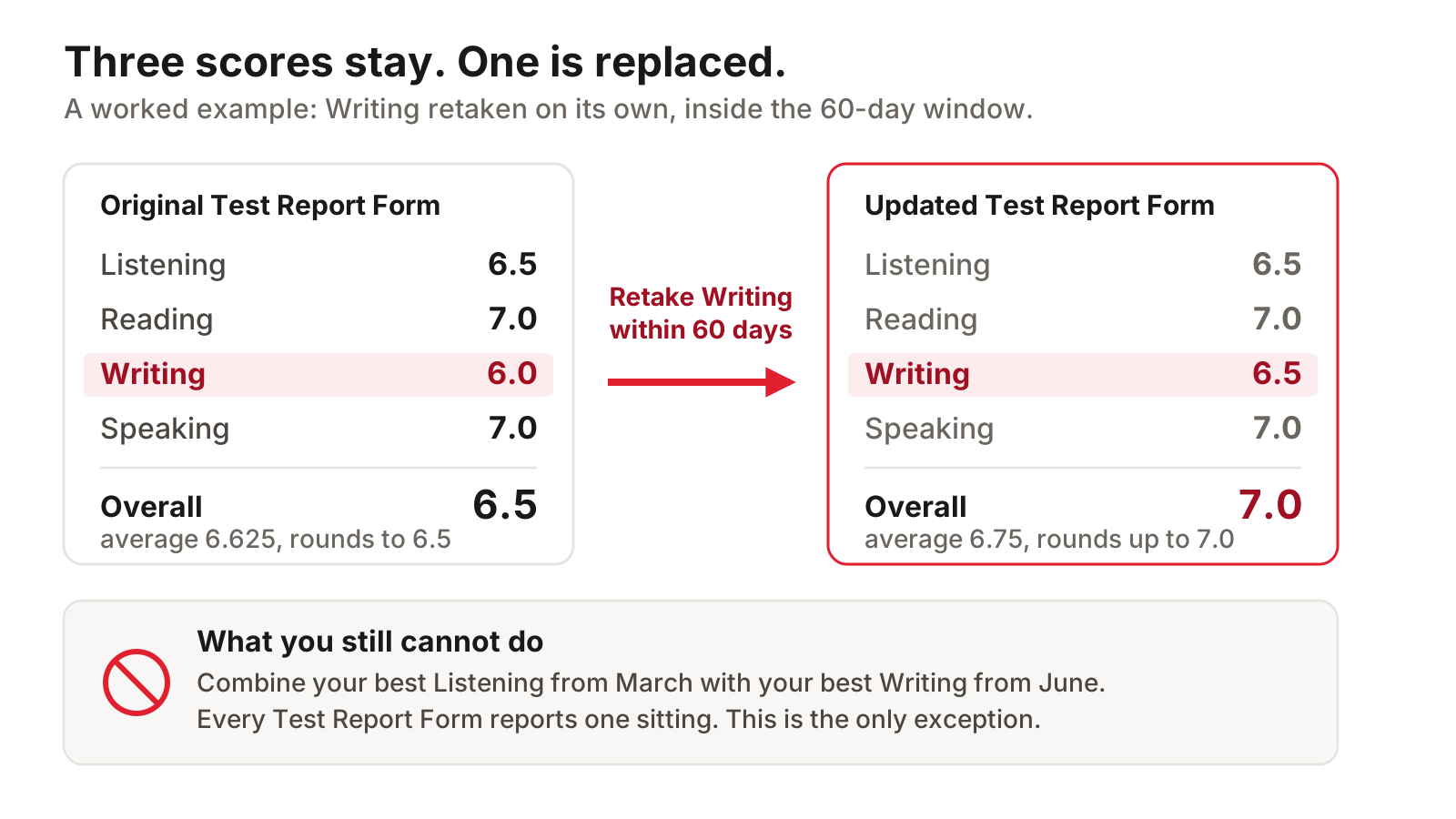
- Scores from different sittings cannot be mixed — you cannot combine your best Listening from one test with your best Writing from another.
Because retakes cost the full fee, treat each one as a decision rather than a reflex. A recent full mock with an estimated band at or above your target is far better evidence of readiness than optimism.
One Skill Retake: the exception worth knowing
One Skill Retake lets you retake a single module — Listening, Reading, Writing, or Speaking — instead of repeating the whole test. It is available for computer-delivered IELTS in eligible regions, and you must complete it within 60 days of your original test date.
After the retake you receive an updated Test Report Form that combines the new module score with the three originals. Two cautions apply: availability varies by country and test provider, and not every organisation accepts One Skill Retake results. Confirm both before building a plan around it.
Ask for a remark before you pay for a retake
A retake is not the only route to a higher number. If a module came back well below what your practice had consistently shown, you can apply for an Enquiry on Results — a remark by a senior examiner. Applications normally have to reach the test centre within six weeks of the test date, and the fee is refunded if any band score changes.
A remark is most worth considering for Writing and Speaking, where the score rests on an examiner's judgement against the band descriptors. It is rarely worth it for Listening and Reading, which are marked against a fixed answer key. Be ready for the outcome that every score stays exactly as it was, and check the current fee and deadline with your test centre before applying.
How to approach a retake sensibly
Start with diagnosis. Your score report tells you which module fell short but not why, so reconstruct the sitting: did you run out of time in Reading, miss the word count in Writing, or lose focus in Listening Part 3? The right fix depends entirely on the cause.
- Writing: check the mechanical causes first — under the word count, one part of the Task 2 question never answered, or a Task 1 response with no overview.
- Reading: work out whether you ran out of time or ran out of accuracy. Unfinished passages and confidently wrong answers need opposite fixes.
- Listening: note whether the marks went in Parts 3 and 4, where the language gets denser, or evenly across all four, which usually points at spelling and word limits.
- Speaking: long silences, one-sentence answers, and a narrow range of tenses cost far more than an accent ever will.
Then practise under exam conditions, not around them. Untimed exercises build knowledge; timed, full-length practice builds the score. Use the estimated band from a mock as your go or no-go signal before paying for the next sitting.
Common questions
Can I retake just the module I did badly in?
Only through One Skill Retake, which requires a computer-delivered test in an eligible region and must be completed within 60 days of the original sitting. In every other case, a retake means the full four-module test.
Will universities see all my previous attempts?
You choose which Test Report Form to submit, and organisations see the report you send them. No automatic history of earlier sittings is attached to your application.
My result expires soon but my application is already in. Is that a problem?
What usually matters is whether the result is still valid when the organisation assesses it, and policies differ. Ask the university or immigration authority directly rather than assuming.
How soon can I book another test?
There is no official gap for a full retake, so you can book as soon as seats are available. Give yourself preparation time first — a retake without a plan tends to repeat the same score.
Before paying for another sitting, sit a full mock that behaves like the real computer-delivered exam. You will get an estimated band per module — an honest readiness check, not a promise.
Retake-ready? Test yourself first