
Reading
The grammar that unlocks IELTS Reading: reference words, paraphrase and sentence structure
Stop losing True/False/Not Given marks: resolve reference words, spot grammatical paraphrase, and find the main clause before you decide.
CD IELTS Prep Editorial Team · Published 30 July 2026 · Updated 30 August 2026 · 7 min read
Original, independent practice guidance. CD IELTS Prep is not an official IELTS provider; confirm current booking and test-day requirements with your test centre.
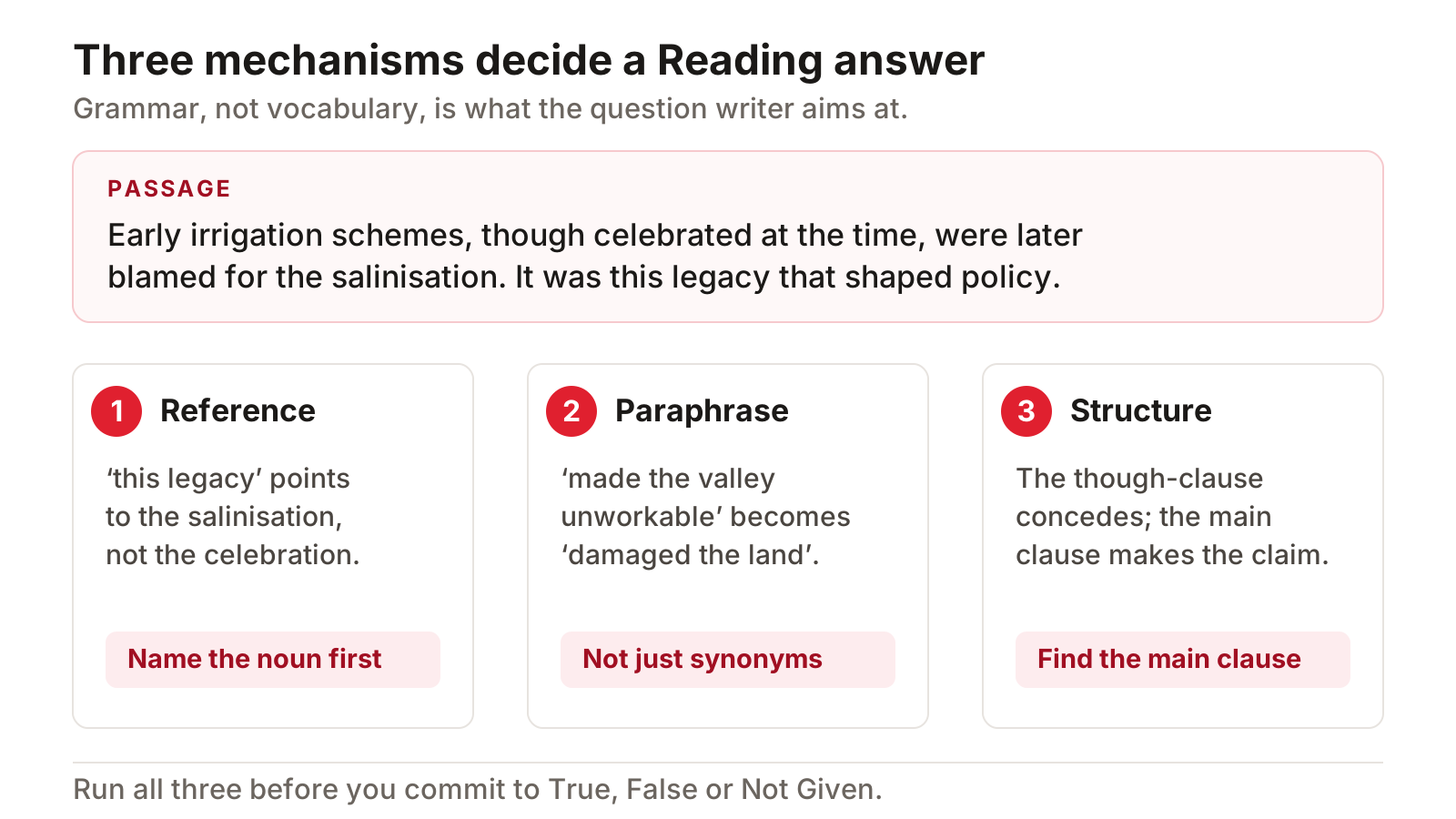
Nobody asks you a grammar question in IELTS Reading, yet grammar decides a large share of the answers. The test is built on three grammatical mechanisms: reference words that carry meaning across sentences, paraphrase that restates passage grammar in a different shape, and sentence structures that hide the writer's real claim inside clauses. Candidates who read word by word miss all three. This guide shows each mechanism with worked examples.
Why grammar beats vocabulary drilling here
Vocabulary breadth helps Reading, but it saturates: past a certain point, another hundred memorised words barely move your score, because the test rarely hinges on rare words and often glosses technical terms in the passage itself. Grammatical reading does not saturate — every passage is made of reference chains, restructured claims and subordinated meaning, so a mechanism learned once pays on every text you will ever meet. It is also faster to acquire: the patterns below number perhaps a dozen, against the thousands of words a vocabulary route requires.
Reference words: tracking what 'this' actually is
Consider: 'The council trialled congestion charging in 2019. This proved unpopular with retailers, although it reduced traffic by a noticeable margin.' A question asks what retailers disliked. The answer depends entirely on resolving 'this' — the charging scheme, not the year, not the council. Reference chains (it, this, they, such measures, the former, the latter, ones) are where Not Given traps live: a statement can reuse the passage's nouns while attaching them to the wrong referent. Whenever an answer hinges on a pronoun, stop and name the noun it stands for before deciding anything.
Paraphrase is grammatical, not just lexical
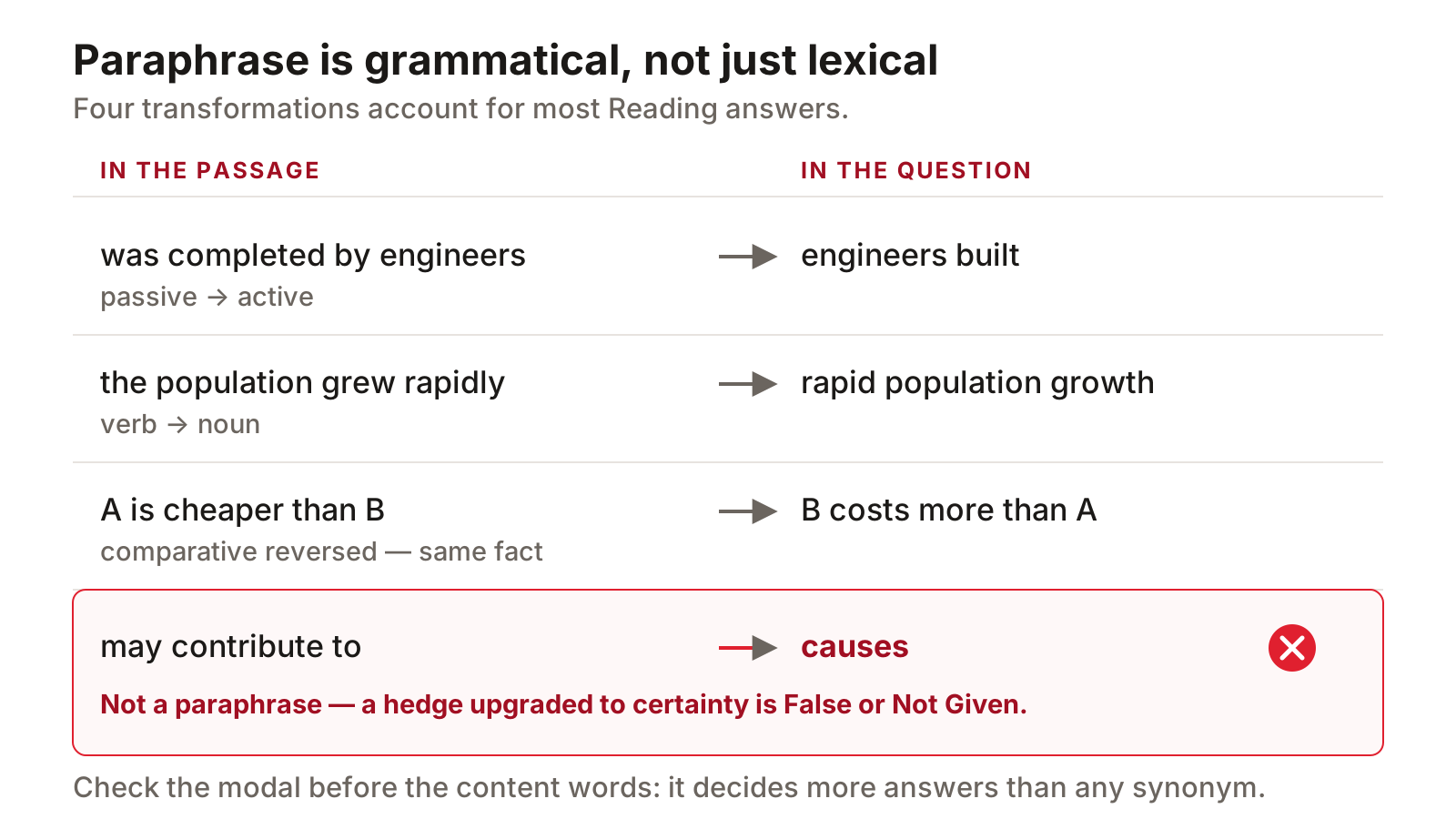
Preparation courses teach synonym-spotting, but the test paraphrases grammar at least as often as vocabulary. The passage says 'The bridge was completed by local engineers in under a year'; the question reads 'Local engineers took less than twelve months to build the bridge.' No difficult synonyms — the transformation is passive to active, plus a nominal swap of 'under a year' for 'less than twelve months'. Common patterns worth drilling:
- Passive to active and back: 'was introduced by the government' becomes 'the government brought in'.
- Verb to noun: 'the population grew rapidly' becomes 'rapid population growth'.
- Comparative reversal: 'A is cheaper than B' becomes 'B costs more than A' — same fact, mirrored grammar.
- Negative restatement: 'far from harmless' means harmful; 'not uncommon' means fairly common.
- Modality shifts: 'may contribute to' is NOT the same claim as 'causes' — this difference alone decides many TFNG answers.
Sentence structure: find the main clause before you judge
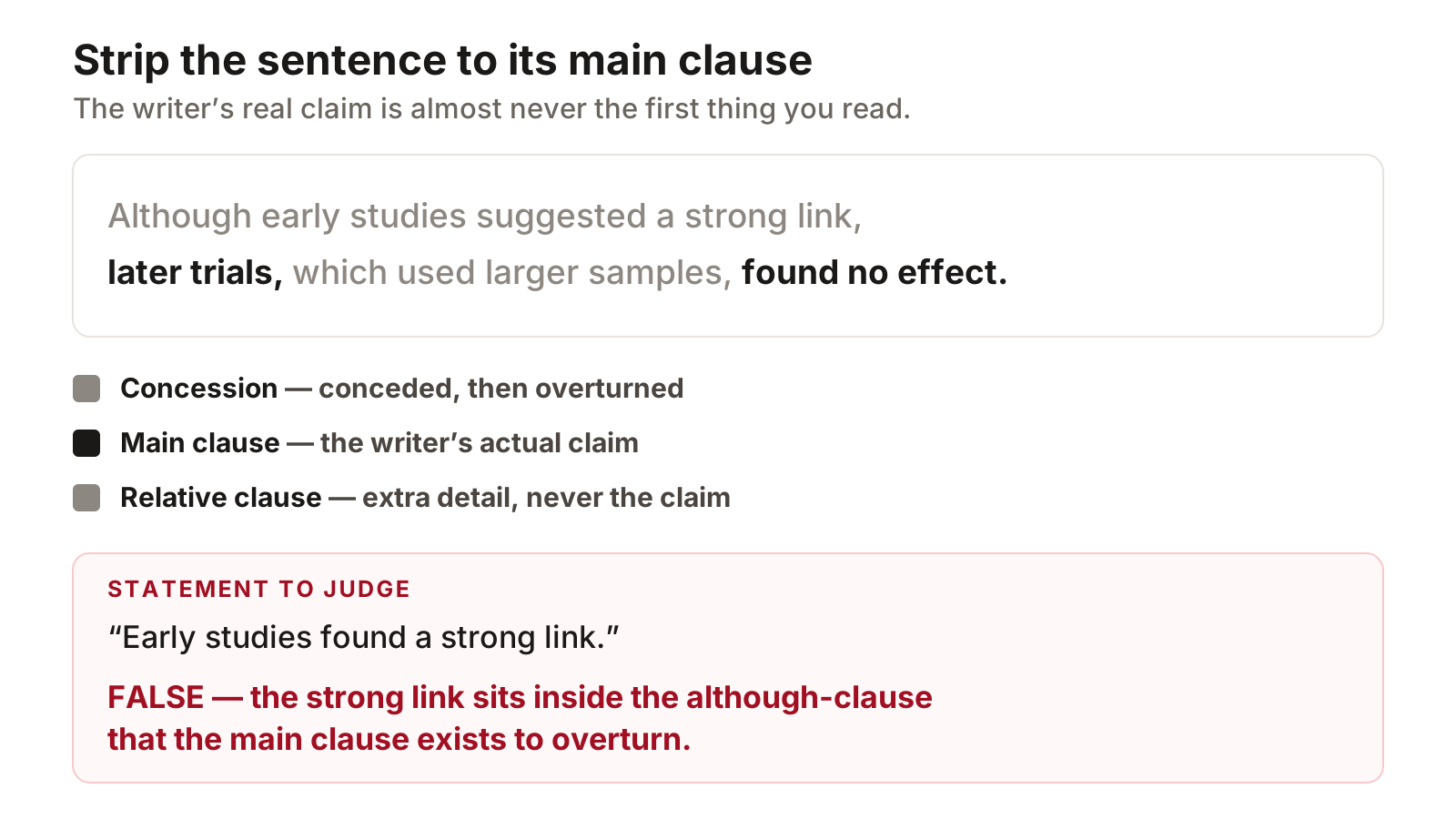
Academic sentences bury claims in subordinate clauses: 'Although early studies suggested a strong link, later trials, which used larger samples, found no significant effect.' A statement claiming 'Studies found a strong link' is False — the strong link lives inside an although-clause the sentence exists to overturn. The reliable habit is to strip each long sentence to subject, verb and object, then note what the subordinate clauses concede or qualify. Words like although, while, despite and however are not decoration; they mark exactly where the writer reverses direction, and question writers aim at those hinges deliberately.
A worked example: three mechanisms in one question
Passage: 'Early irrigation schemes, though celebrated at the time, were later blamed for the salinisation that made much of the valley unworkable. It was this legacy that shaped the cautious policies of the following century.' Statement: 'Later policies were cautious because early irrigation had damaged the land.' Verdict: True — but only if you run all three mechanisms. Sentence structure: the though-clause concedes celebration while the main clause carries the blame. Reference: 'this legacy' must be resolved to the salinisation damage, not the celebration. Paraphrase: 'damaged the land' restates 'made much of the valley unworkable' with different grammar and vocabulary. A keyword reader sees 'celebrated' and hesitates towards False; a grammar reader sees the sentence's actual architecture and answers in twenty seconds.
For the full question-type method built on these three mechanisms, read the Band 7+ Reading playbook.
Read the playbookA ten-minute daily drill
- Take one paragraph from any practice passage and circle every reference word, then draw an arrow to what each one stands for.
- Rewrite two sentences from the paragraph in different grammar — active to passive, verb to noun — to train paraphrase recognition from the production side.
- Strip the longest sentence to its main clause and say aloud what the subordinate clauses add: concession, condition, cause, or qualification.
- Finish by predicting the part of speech for any completion gaps in that passage before looking for answers.
Grammar as an answer filter in completion tasks
In summary and sentence completion, the gap's grammar eliminates wrong answers before you read a single line of the passage. An article ('a ___') demands a singular countable noun; a preposition before the gap constrains the phrase type; a verb gap must agree with its subject in number and tense. Checking form takes five seconds and catches the classic error of pasting in a word that matches the meaning but breaks the sentence — which scores zero exactly as a wrong answer would.
Apply these three mechanisms on original passages with answer-by-answer explanations.
Practise Reading nowCommon questions
Do I need to study grammar theory for Reading?
Not as theory. You need functional recognition: resolving reference words, seeing paraphrase patterns, and finding the main clause. Drill those on real passages rather than working through a grammar syllabus.
Why do modal verbs matter so much in TFNG questions?
Because 'may', 'can' and 'tends to' make weaker claims than 'does'. A statement that upgrades the passage's hedge into certainty is False or Not Given even though every content word matches.
How is this different from Writing grammar?
Reading grammar is receptive — recognising structures under time pressure. The same knowledge helps Writing, but there you must also produce the structures accurately, which needs separate practice.
Run all three mechanisms under real Reading pressure: 40 questions, 60 minutes, no pauses.
Take a mock test