
Reading
How to get Band 7+ in IELTS Reading: a question-type playbook
Band 7 Reading is 30 of 40 in Academic — a question-type playbook for TFNG, matching headings and completion, plus the timing that protects them.
CD IELTS Prep Editorial Team · Published 5 August 2026 · Updated 30 August 2026 · 8 min read
Original, independent practice guidance. CD IELTS Prep is not an official IELTS provider; confirm current booking and test-day requirements with your test centre.
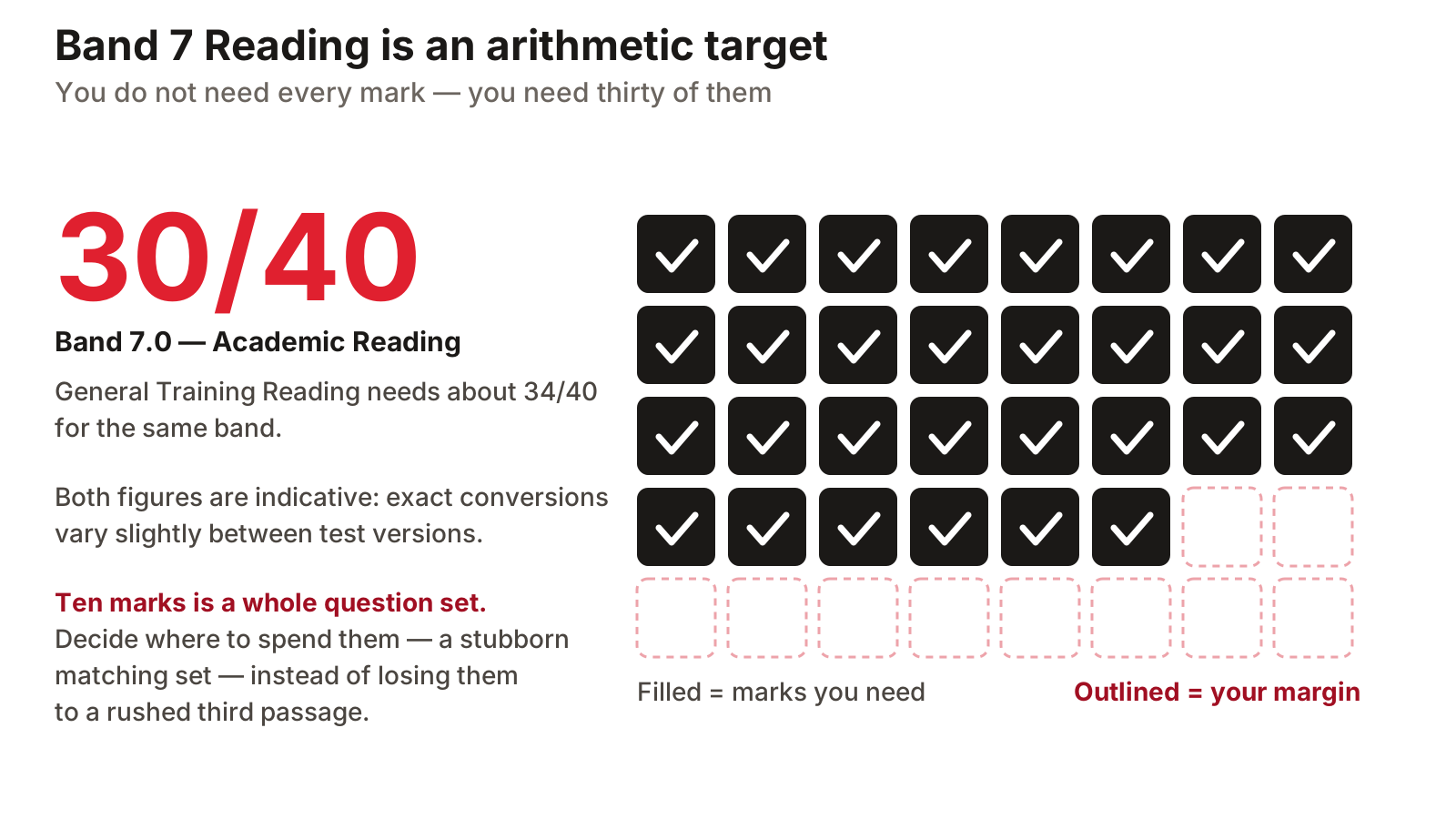
Band 7 in Academic Reading corresponds to roughly 30 correct answers out of 40 on the published indicative scale. That number reframes the task: you can miss ten questions — an entire question set — and still reach the band. Candidates stuck at 6.0 or 6.5 usually do not need faster reading; they need a reliable method for the two or three question types that quietly absorb their wrong answers. This playbook goes type by type.
True/False/Not Given: test the claim, not the topic
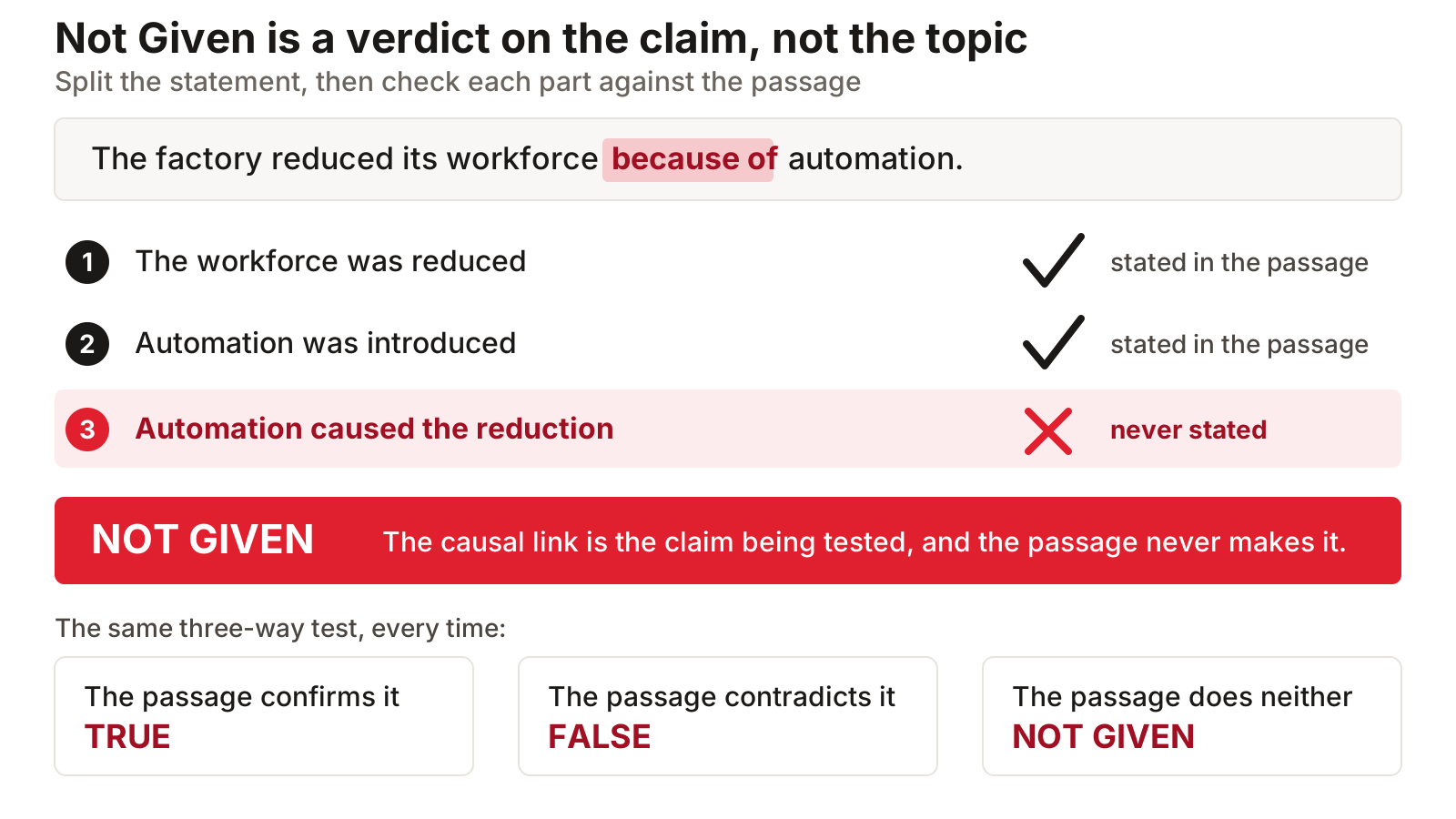
TFNG questions fail candidates in one specific way: they confuse 'the passage talks about this' with 'the passage states this'. Take the statement 'The factory reduced its workforce because of automation.' If the passage says the factory reduced its workforce and, separately, that it introduced automation, the answer is Not Given — the causal link is the claim being tested, and the passage never makes it. The working method: underline the precise claim, find the matching passage sentence, and ask whether it confirms the claim (True), contradicts it (False), or does neither (Not Given). If you are re-reading the whole paragraph hunting for a feeling, you have stopped testing the claim.
Matching headings: paragraphs have jobs, not just topics
Headings describe what a paragraph does — proposes a solution, questions earlier evidence, gives a historical account — not merely what it mentions. Read the first and last sentences of the paragraph, state its job in your own words, and only then look at the list of headings. Doing it in the other direction, holding ten headings in your head while reading, is how the wrong-but-plausible options win. Do this set last, once you already know the passage from answering the other questions.
Summary and sentence completion: grammar narrows the field
Before searching the passage, decide what part of speech the gap needs. 'The results were affected by ___' needs a noun phrase; 'the method proved ___' needs an adjective. That single check eliminates most of the passage as a source and catches answers that fit the meaning but break the sentence. Then confirm the word limit and copy the spelling exactly — completion answers are marked as typed, and a correct idea spelt wrongly scores zero.
Matching information and features: accept the scatter
'Which paragraph contains…' questions do not follow passage order, and some paragraphs are used twice while others are never used. Budget for the scatter: answer the ones you can locate quickly, flag the rest, and return after the ordered question sets have taught you the passage layout. Chasing one stubborn matching question for four minutes is the classic Band 6 time leak.
Multiple choice: eliminate before you select
Reading multiple choice at Band 7 level is an elimination exercise, because the wrong options are engineered to be almost right. Each distractor typically fails in one of three ways: it uses the passage's exact words attached to a claim the passage never makes; it states something true in the world but absent from the text; or it exaggerates a hedge — turning 'may have contributed' into 'was the main cause'. Work through the options crossing out each one with a named reason, and the answer that survives is safer than the answer that merely 'sounded right'. If two options survive, the difference between them is the question — reread only the sentence that separates them, not the whole paragraph.
The timing frame that protects all of it
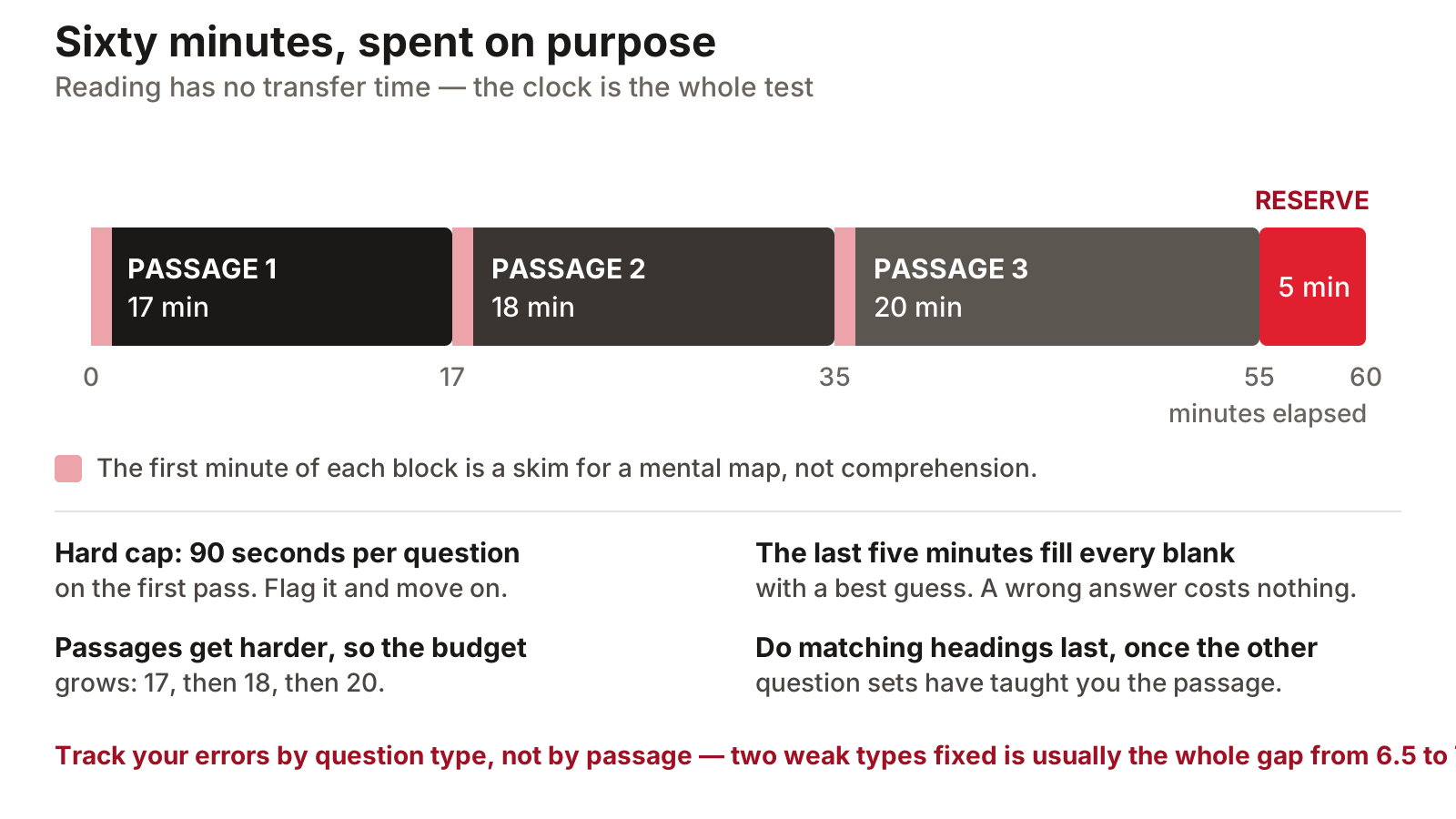
- Three passages, 60 minutes, no transfer time: plan 17–18–20 minutes with a five-minute reserve, because passages get harder.
- Skim each passage for one minute before the questions — enough for a mental map, not comprehension.
- Hard cap of 90 seconds per question on the first pass; flag and move on, then return.
- Use the final five minutes to fill every blank with a best guess — wrong answers cost nothing.
- Track your errors by question type, not by passage. Two weak types fixed is typically the whole gap from 6.5 to 7.0.
Tracking your way to 30/40
Progress towards Band 7 is easiest to manage as arithmetic. After each timed practice test, sort your ten-plus wrong answers by question type and by cause — wrong location, wrong interpretation, instruction error, or ran out of time. Most candidates find the losses concentrated: perhaps four marks to TFNG interpretation, three to a rushed third passage, two to word-limit slips. That is not a general reading problem; it is two specific fixes and one timing adjustment, each worth measurable marks. Re-test weekly and watch the per-type numbers rather than the total, because the total can wobble with passage difficulty while the type-level trend tells the truth.
Drill each question type on original passages with per-type feedback.
Start Reading practiceCommon questions
How many correct answers do I need for Band 7 in Reading?
On the published indicative scales, about 30 of 40 in Academic Reading, and about 34 of 40 in General Training Reading. Exact conversions can vary slightly between test versions.
Should I read the passage fully before the questions?
At Band 7 level, a one-minute skim followed by question-led reading beats full reading for most candidates. The ordered question sets then walk you through the passage anyway.
Why do I understand the passage but still lose marks?
Almost always method: matching question words instead of meaning, missing a word limit, or misreading what a TFNG claim actually asserts. Diagnose by error type before buying more reading material.
Check what your latest raw Reading score means in bands.
Use the band calculator