
Listening
IELTS Listening tips: maps, form completion, spelling traps and prediction
Win back the marks most candidates drop in Listening: predict answers, survive distractors, label maps calmly, and spell Part 1 answers right.
CD IELTS Prep Editorial Team · Published 24 July 2026 · Updated 30 August 2026 · 7 min read
Original, independent practice guidance. CD IELTS Prep is not an official IELTS provider; confirm current booking and test-day requirements with your test centre.
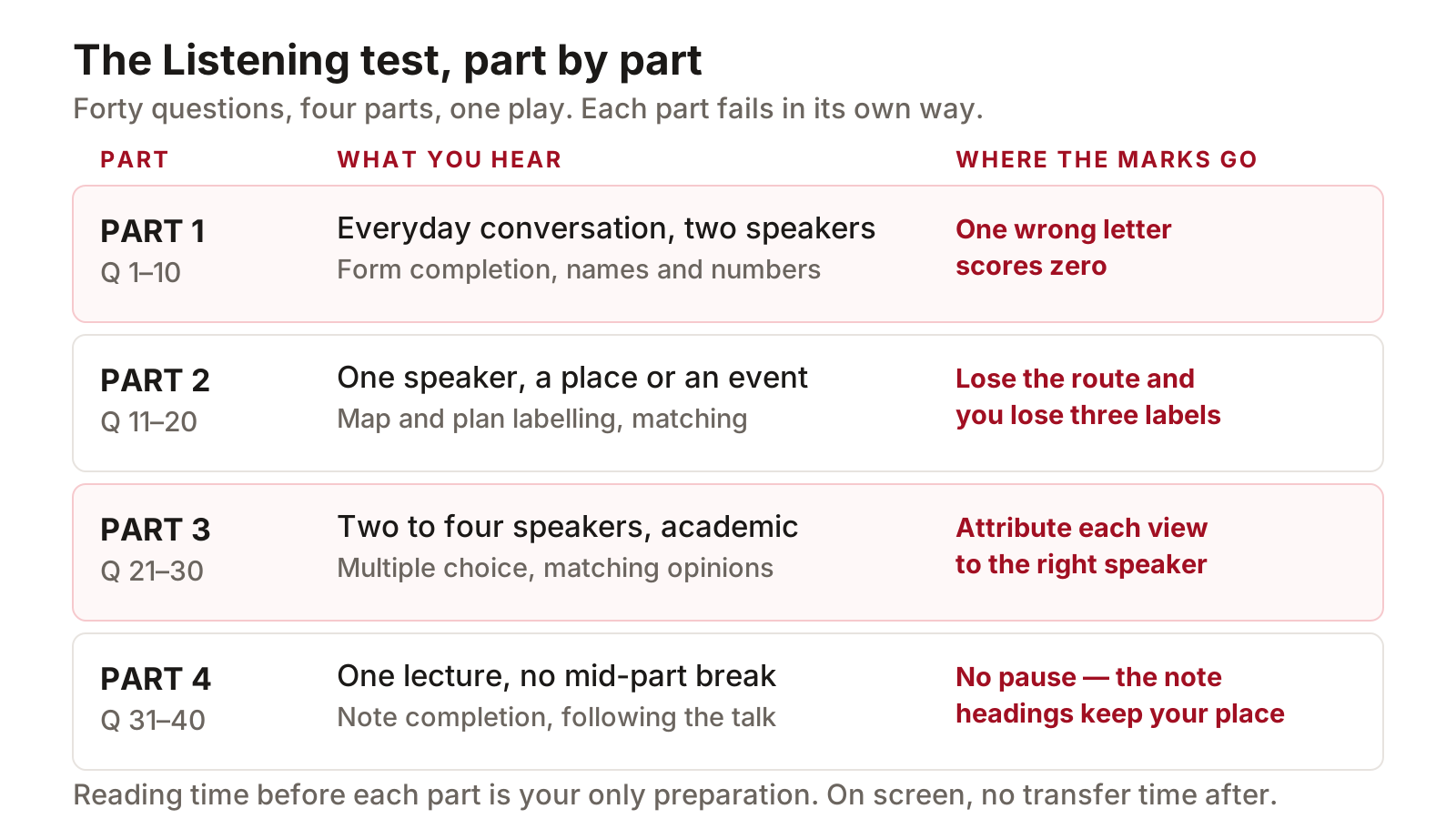
IELTS Listening plays once. That single fact shapes every useful tip: anything you can do before the audio starts — predicting answer types, orienting a map, reading ahead — is preparation you cannot recover later, and anything that distracts you mid-recording costs answers you cannot replay. These tips focus on the question formats that cause the most avoidable losses.
Prediction: do the thinking before the audio
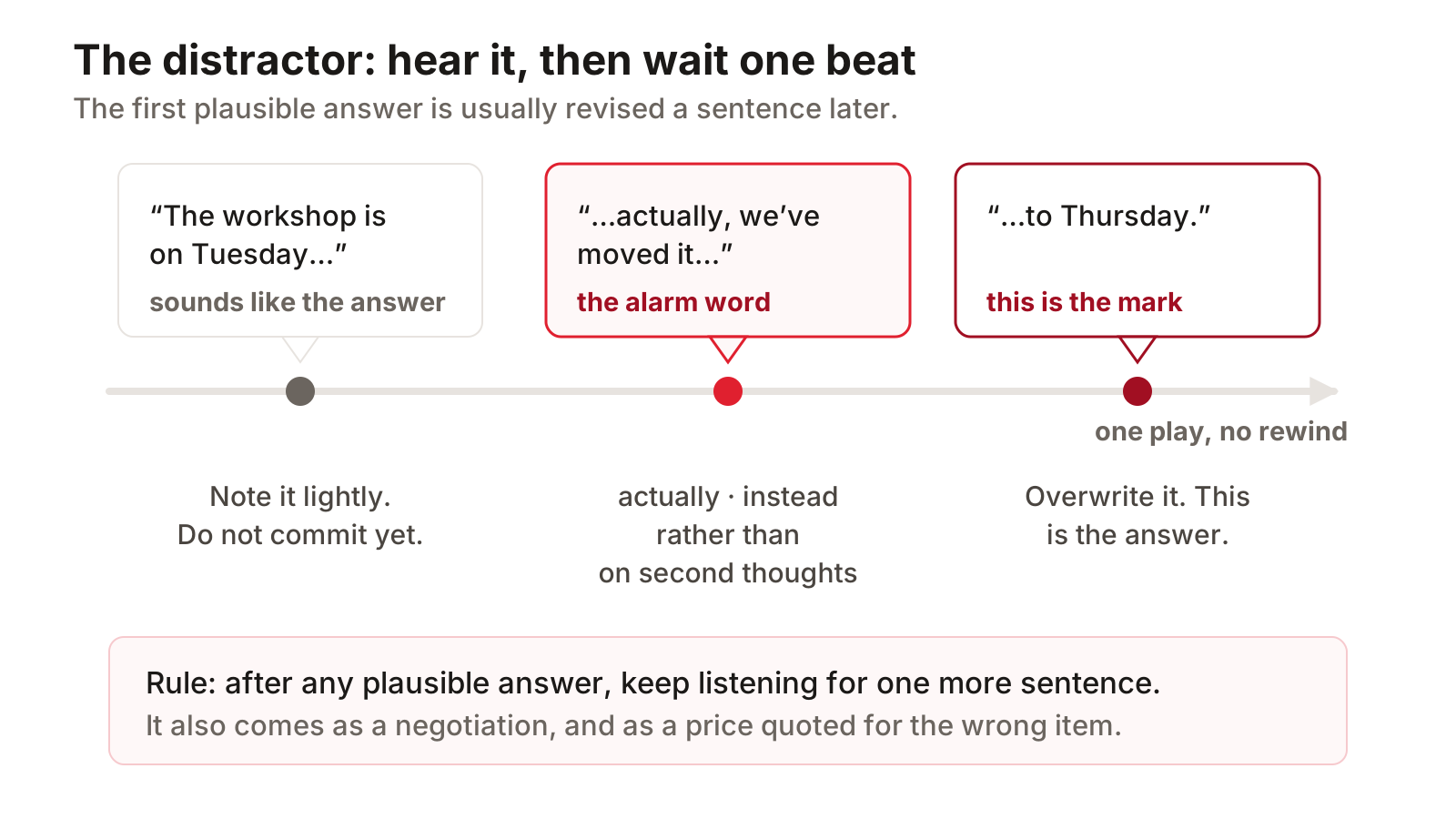
Every pause in the recording — the introduction, the mid-section break — is reading time. Use it to label each gap with the kind of answer it needs: a number, a day, a street name, a noun. 'The workshop takes place on ___' primes you for a day or date, so when the speaker says 'we've moved it from Tuesday to Thursday', you are ready for the correction trick: the first plausible answer is often revised a sentence later, and 'Thursday' is the mark. Candidates who have not predicted are still processing 'Tuesday' when the real answer goes past.
Distractors: the test's favourite instrument
Nearly every Listening section uses deliberate distractors — plausible answers raised and then withdrawn. They come in three shapes: the correction ('Tuesday — no, sorry, Thursday'), the negotiation ('shall we say the café? Actually, the library is quieter'), and the near-miss detail (a price mentioned for one item when the question asks about another). The defence is the same for all three: keep listening for a beat after you hear a plausible answer, and treat words like 'actually', 'instead', 'on second thoughts' and 'rather than' as alarms that the mark is about to move.
Maps and plans: orient before the speaker starts moving
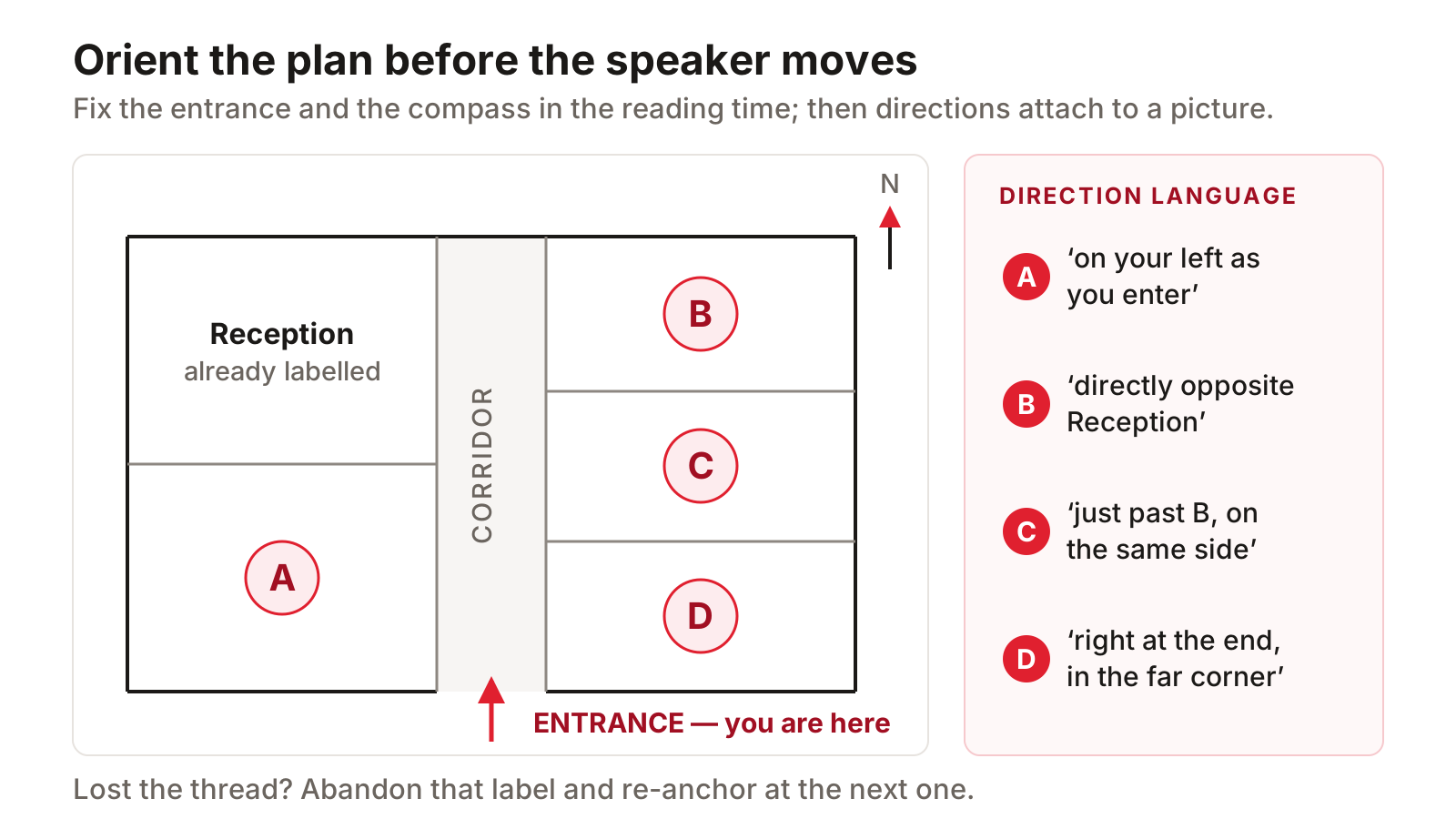
- In the reading time, fix the anchor points: the entrance, anything already labelled, and the compass if one is given.
- Say the layout to yourself spatially — 'reception bottom left, corridor runs north' — so directions attach to a picture, not to floating words.
- Track the speaker's position continuously; map answers are cumulative, and losing the thread at label two usually costs labels three and four as well.
- Learn the direction language cold: 'just past', 'opposite', 'directly in front of', 'in the far corner', 'on your left as you enter'.
- If you lose your place, abandon the missed label instantly and re-anchor at the next one — one dropped answer is recoverable, three are not.
Form and note completion: where spelling becomes scoring
Part 1 is the easiest audio and the most punishing marking: names are spelt out letter by letter, and a typed answer with one wrong letter scores zero. Drill the letter pairs that blur under pressure — A and R, G and J, I and E, double letters signalled by 'double s' — and write numbers as digits, which the instructions allow and which cannot be misspelt. Watch units and word limits: if the form says '£___', the answer is the number alone, because the pound sign is already printed. On the computer-delivered test there is no transfer time at the end to fix spelling, so it has to be right as you type it.
Practise map labelling and form completion with replay-and-review after scoring.
Start Listening practiceParts 3 and 4: multiple choice and matching under pressure
The later sections swap forms for opinions, and the traps change with them. In Part 3 multiple choice, all three options are usually mentioned in the audio — the discussion raises each one — but only one matches what the speakers finally agree or conclude. Listen for the verdict language: 'so shall we go with', 'I'm still not convinced', 'that settles it'. Read the question stems in the breaks and underline who the question is about, because attributing the tutor's view to the student is the classic Part 3 error. In matching tasks, cross off used options as you go and accept that one or two will remain uncertain; a fast, reasoned guess protects the questions still to come.
Part 4 is a single lecture with no mid-section break, usually completing notes that follow the recording's structure. The notes themselves are your map: the headings tell you where the lecture is going, so if you hear content matching a later heading, you have missed a gap — skip forward and stay with the speaker. Signposting language ('turning now to', 'a second consequence') marks the transitions between note sections and is the safest way to keep your place for ten unbroken minutes.
Common spelling traps worth drilling
- High-frequency test words: accommodation, environment, government, restaurant, temperature, library, Wednesday, February.
- Plural marks: 'facilities' and 'resources' are usually plural in context — a missing s is a lost mark.
- Homophones in addresses and names: read what you typed back against the letters you heard, not against the word you expected.
- Hyphenated and compound answers: 'part-time', 'checkout' — copy the form the speaker's context requires.
Common questions
Should I write answers while listening or wait?
Type or note the answer the moment you hear it. Waiting relies on memory across distractors, and the recording will not slow down while you catch up.
What if I miss an answer completely?
Let it go immediately and lock onto the next question. After the section ends, return and enter a plausible guess — blanks are the only guaranteed zeros.
Why is Part 3 harder than Part 2 for most people?
Part 3 is a multi-speaker discussion where opinions are raised, challenged and revised. Attach each opinion to its speaker, and treat 'I used to think' and 'you could argue' as signals that the final view is still coming.
Hear the question formats inside a full test flow, with the real one-play discipline.
Take a Listening mock