
IELTS by destination
IELTS preparation for New Zealand
New Zealand draws IELTS candidates on two very different tracks: study at its universities and polytechnics, and residence through the Skilled Migrant Category and the work visas that feed it. Study admission reads IELTS Academic, while Immigration New Zealand sets the English rule for migration — and it accepts IELTS among its approved tests. Knowing which variant your route needs, and how the country reads your band, is the first preparation step.
- Variant for study routes
- AC
- Accepted for work & residence
- AC+GT
- Sets the migration English rule
- INZ
- To start practising
- $0
New Zealand · 01
Which IELTS do you need for New Zealand?
For university and polytechnic admission, and for professional registration, the accepted paper is IELTS Academic — the institution sets the entry band, and it reads Academic almost without exception. For the work and residence visas that carry an English requirement, Immigration New Zealand accepts either IELTS General Training or Academic, so the migration side is more flexible than the study side.
Listening and Speaking are identical across both variants; only Reading and Writing Task 1 differ, with General Training Reading scored on a stricter conversion. Practise against the variant your route actually requires, and confirm the specifics on the official Immigration New Zealand and institution pages before you book.
New Zealand · 02
How Immigration New Zealand reads your English
For residence and most skilled work visas it is Immigration New Zealand, not the university, that sets the English rule. INZ publishes a minimum overall band its approved tests must meet, and IELTS — in both its General Training and Academic forms — is one of those approved tests. Because that figure is set by policy and reviewed periodically, treat the exact number as something to verify on the INZ site rather than memorise.
The English requirement works as a pass or fail gate: your result must clear the published band before an application can proceed, and that is separate from the points that rank a Skilled Migrant Category profile. Meeting the band qualifies you; the points then decide selection. INZ also expects a test to be recent when you apply, so plan your sitting close to the application rather than years ahead.
New Zealand · 03
More than one way to prove English
An IELTS result is only one of the forms of evidence INZ recognises. A passport from a country it treats as majority English-speaking, a recognised qualification taught entirely in English, and — for some categories — ongoing skilled employment in New Zealand can each satisfy the English requirement without a test. Where none of those apply to you, IELTS is the route most candidates take.
On the study side the provider, not INZ, sets the entry band, and it is almost always IELTS Academic. The Post-Study Work Visa that follows a qualifying New Zealand qualification does not add a separate language test of its own — so for many applicants a single IELTS Academic result opens the course first and the work-and-residence pathway later.
New Zealand · 04
Practising for the computer-delivered test
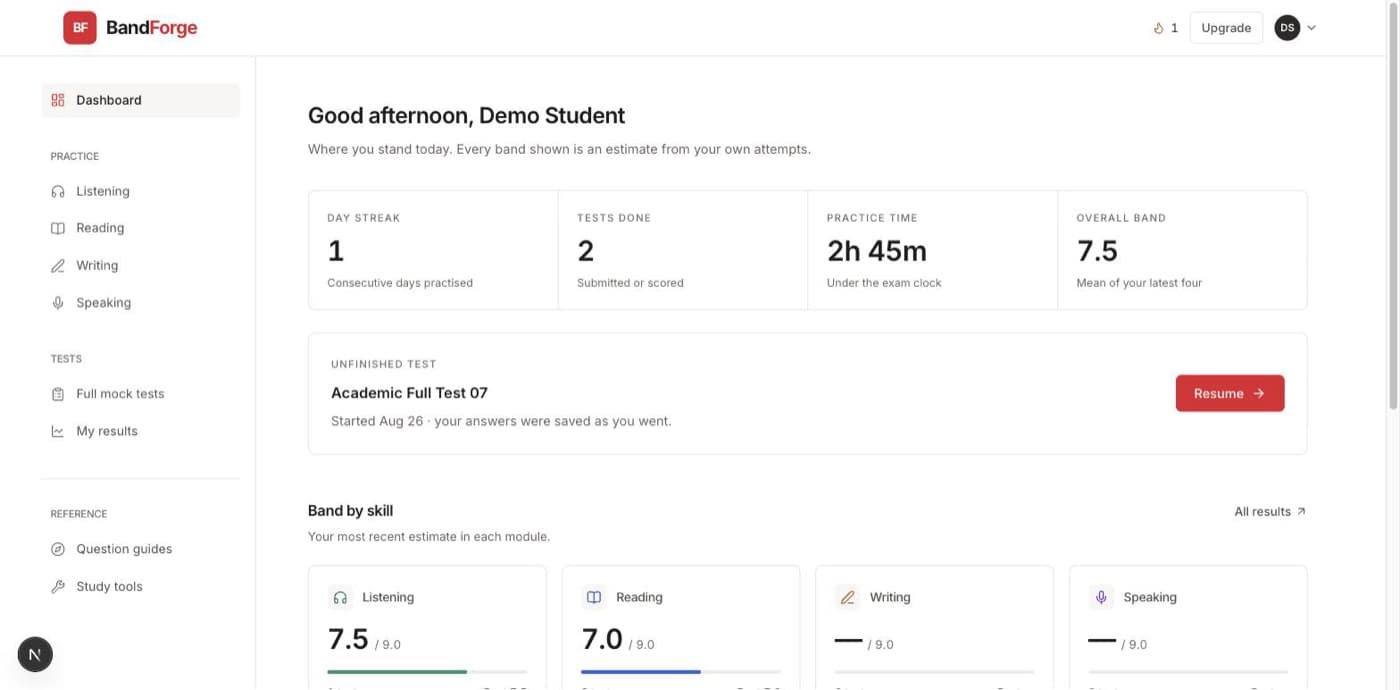
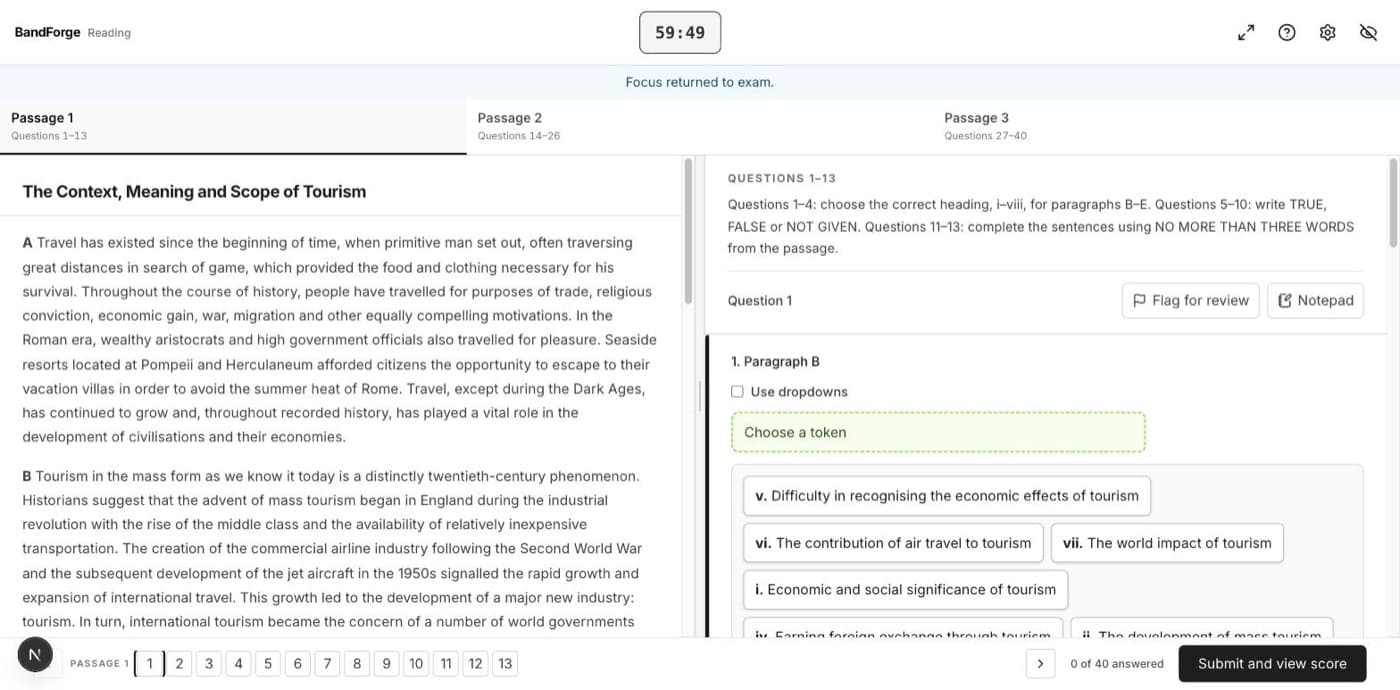
New Zealand test centres widely offer computer-delivered IELTS, and its interface — one-play Listening audio with a short review window, on-screen highlighting, and typed Writing with a live word count — is exactly what CD IELTS Prep reproduces. Sitting full timed mocks in the same software removes the format as a variable on test day, leaving only the language.
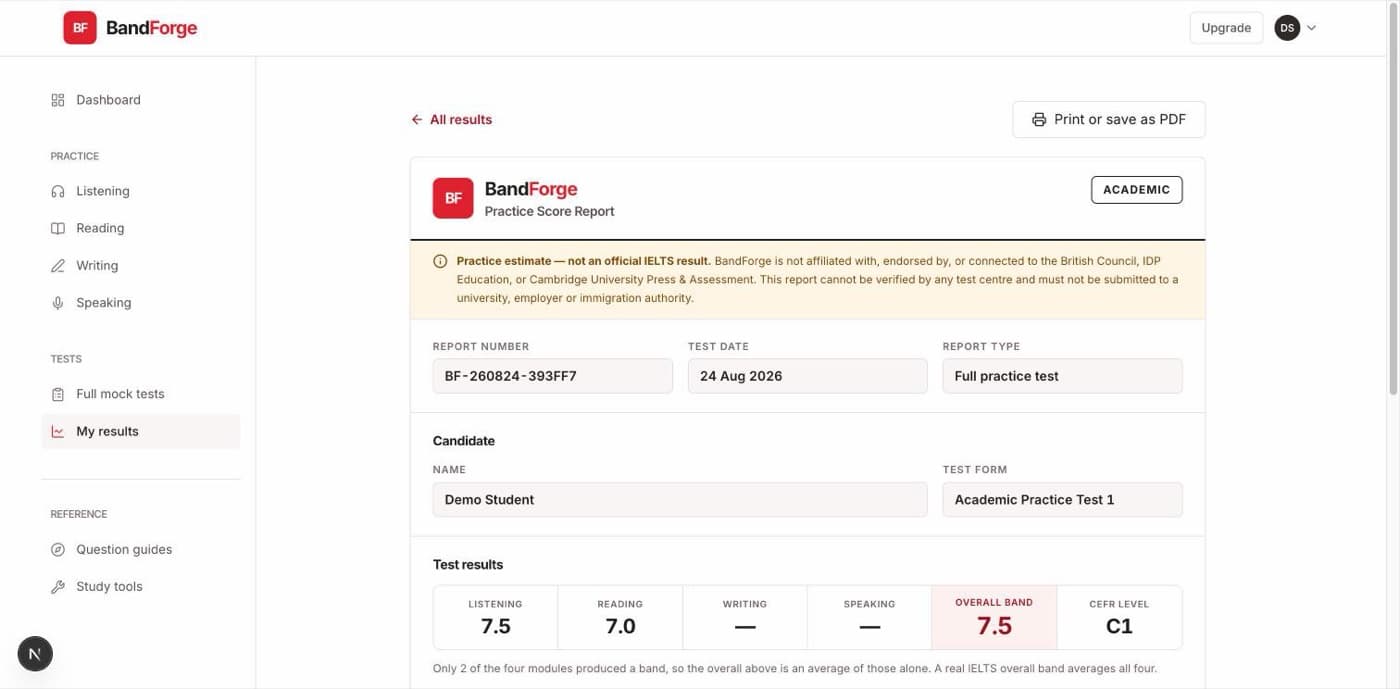
Because Listening and Speaking are shared across Academic and General Training, that practice transfers whichever paper your route needs. The reports page breaks your accuracy down by question type and module, so instead of re-sitting whole mocks you can see exactly which module is holding your overall band back and drill it.
The numbers
New Zealand requirements at a glance
The official mappings and minimums, on the page — verify your exact stream on the official source it names.
Which IELTS variant each New Zealand route needs
Study reads Academic; Immigration New Zealand accepts either variant for the visas that carry an English requirement. Confirm your exact route on the official source before booking.
| Route | IELTS variant | Who sets the requirement |
|---|---|---|
| University & polytechnic study | Academic | The institution (NZQA-recognised) |
| Professional registration | Academic | The registering body |
| Skilled Migrant Category (residence) | General Training or Academic | Immigration New Zealand |
| Skilled work visas | General Training or Academic | Immigration New Zealand |
| Post-Study Work Visa | No separate test | Met by your qualifying NZ qualification |
Listening and Speaking are identical across Academic and General Training — only Reading and Writing Task 1 differ — so a single result can serve both study and migration if it meets the higher of the two bars. Always confirm the current requirement on the official Immigration New Zealand and institution pages.
How Immigration New Zealand accepts proof of English
For the visas that carry an English requirement, an IELTS result is one of several forms of evidence INZ recognises — the structure is stable even though the qualifying band is set by policy.
| Type of evidence | What it involves |
|---|---|
| An approved English test | A recent IELTS (General Training or Academic), or another test on INZ's approved list, meeting the published minimum band. |
| English-speaking background | Holding a passport from a country INZ recognises as majority English-speaking. |
| Study taught in English | A recognised qualification completed entirely in English, meeting INZ's level and duration rules. |
| Skilled employment | Ongoing skilled work in New Zealand, where the visa category allows it. |
Only Immigration New Zealand can confirm which evidence your specific visa accepts and the minimum band it requires — check the official INZ pages before relying on any one route. IELTS is the option most candidates without an English-speaking background or prior English-medium study end up using.
The preparation path
How to prepare for New Zealand from here
Three steps, in the same on-screen format you will face at the test centre.
Pick your variant
Academic or General Training — your route decides it, and Reading and Writing Task 1 differ between them.
See the testsSit a timed baseline mock
One full paper in the real computer-delivered interface shows your true starting band and where the marks go.
Start freeDrill what costs you marks
Question-type drills, writing checks and the study plan turn your weakest areas into your daily practice.
Browse practiceFree tools
Built for New Zealand candidates
No account needed — each one answers a question this destination's candidates actually ask.
Full mock tests
Timed Academic and General Training practice in the CD interface.
Open the toolPractice by module
Target the module holding your overall band back.
Open the toolBand 9 writing samples
The same question answered at band 6.5, 7.5 and 9.
Open the toolBand score calculator
Raw Listening and Reading marks turned into band estimates.
Open the toolWhere to start
Pick the skill holding your band back
Each path is a routine you can repeat every week, and it starts on the page where the practice happens.

“I lose marks to spelling and distractors”
A weekly Listening routine
- 1Sit one timed Listening section with the audio played once, as on test day.
- 2Review every wrong answer: spelling, plurals, and the distractor you fell for.
- 3Drill the question type you lose most, then sit another full section.
Questions candidates ask
Frequently asked questions
Do I need IELTS Academic or General Training for New Zealand?
Study admission reads IELTS Academic — universities, polytechnics and professional bodies ask for it. Immigration New Zealand accepts either General Training or Academic for the work and residence visas that carry an English requirement. Confirm your exact route before booking, since Reading and Writing Task 1 differ between the two.
Does Immigration New Zealand accept IELTS?
Yes — IELTS is one of INZ's approved English tests, in both its Academic and General Training forms. INZ publishes a minimum overall band its approved tests must meet; verify the current figure on the official INZ site, as it is set by policy and reviewed periodically.
What band do I need for the Skilled Migrant Category?
The English requirement is a pass or fail gate: your test result must meet INZ's published minimum band before your application can proceed, separately from the points that rank your profile. Because that band is a policy figure, check the current requirement on the Immigration New Zealand pages rather than relying on a number you saw elsewhere.
Can I prove my English without sitting IELTS?
Sometimes. INZ recognises an English-speaking-country passport, a recognised qualification taught entirely in English, and certain skilled employment as alternatives to a test. If none of those apply to you, an IELTS result is the route most applicants take — confirm on the INZ pages which evidence your visa accepts.
Does the Post-Study Work Visa need its own IELTS test?
No — it is granted on the basis of a qualifying New Zealand qualification you have completed, and that study already required English (Academic) to enrol. The IELTS you sit for admission is what opens the study-then-work pathway; there is no separate language test at the work-visa stage.
Can I practise the exact computer-delivered format here?
Yes. Every mock reproduces the computer-delivered interface used at New Zealand test centres — one-play Listening audio with a review window, timed sections, on-screen highlighting and typed answers — so test day tests your English, not new software.

Your next practice session
Sit your next practice test the way you will sit the real one
One free practice item in every module, instant marking, and new tests every week. No card required.